


Experience Architecture: Monetizing Shared Emotional Assets
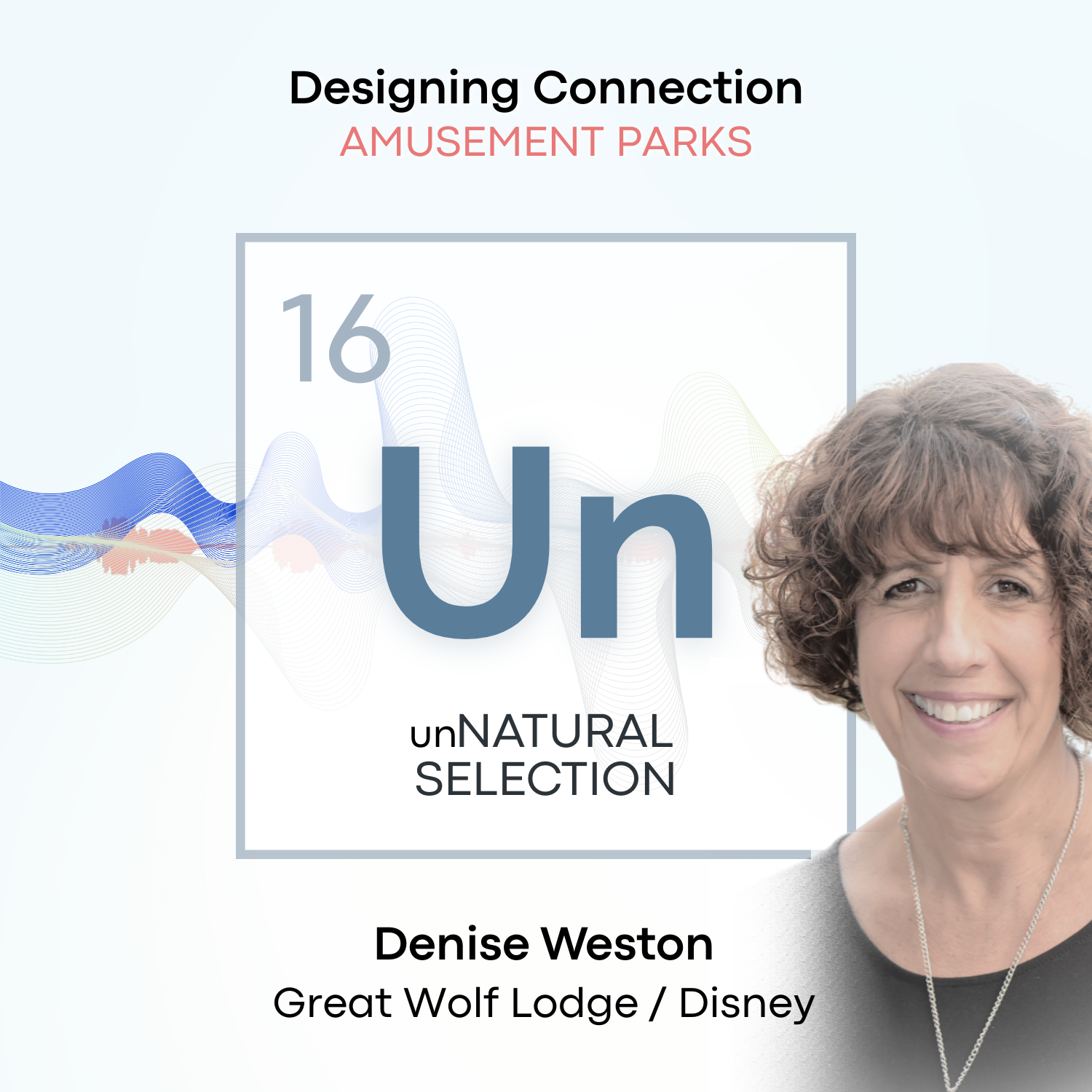
The Science of Imagination. In this episode, we dive into the dynamic field of playology, where psychology, interactive design, and advanced technology come together to craft immersive experiences. From the magic of Disney World to the adventure-filled environments of Great Wolf Lodge, play is no longer just about entertainment—it’s a tool for learning, engagement, and emotional connection. Denise Chapman Weston, a leader in this field, explores how designers create environments that harness the power of imagination to shape the future of human experience. Discover how the science of play is transforming industries, enhancing well-being, and redefining the way we interact with the world around us.
-
(Auto-generated by Spotify. Errors may exist.)
Denise is a globally recognized entrepreneur, director of Imagination at Infinite Kingdoms, and playologist whose career bridges psychology, storytelling, invention and immersive technology.
She's the founder of Invent World's, a trailblazing venture crafting sensory rich AI powered experiences designed to do one thing brilliantly, make human connection the most powerful technology in the world.
1:21
With over 150 patents, Denise has helped bring to life some of the world's most beloved interactive attractions that bring people together to play in water parks, theme parks, museums and the live action gaming technology, including the iconic Magic Quest where magic becomes real with a wave of want.
1:38
Still casting spells daily at every great Wolf Lodge across the country.
Magic Quest is one of the many enduring innovations and Edmund Hillary, fellow and resident the New Zealand epic mega grant recipient and adjunct professor Purdue University.
Her inventive fingerprints span Universal Studios, Disney, SeaWorld and Six Flags, but her favorite title remains forever 7 year old who still believes in magic.
2:01
Denise, welcome to a natural selection.
2:04
Speaker 1
Thanks for having me.
2:06
Speaker 2
I start with the same question just to level set.
And so before we get started, Denise, could you please tell us what business you're in and what your role is within that business?
2:16
Speaker 1
I list myself as a playologist, a director of imagination, but truly, at my heart, I'm an inventor because I look at the combination of innovation and imagination and seeing what's possible that isn't there yet, and figuring out ways to do it on a scale that can be everything.
2:40
That starts at home but brings people out into the world To play or to recreate or to have an experience in memories and curated experiences that really drive home how important it is to get away from the mundane and to have an incredible time with people who love.
3:00
Meet new friends and be someplace that feels extraordinary.
3:06
Speaker 2
So much of what you say resonates the As you know, the premise behind this podcast is about imagination and experience, and how do we extract and unpack it in such a way that others can benefit and learn from it.
Whether you're in athletic footwear, in healthcare or playology, there's there's a pattern, right?
3:30
There are differences obviously, but there are also like some fundamental similarities when it comes to imagination, when it comes to exploration, when it comes to accepting failure, when it comes to and even the structures and how you think about different types of innovation that you use within your final product or service.
3:52
Whether you're thinking about the experience, you're thinking about the product, you're thinking about features or you're thinking about delivery and so on, or even the network that I think we can learn a lot.
But if we if we pull it back now and we just want to learn a little bit more about what it is exactly that you do, can you give us a quick overview of the companies that you're involved with and the roles, the role that they play in immersive play and experience design?
4:18
The role of immersive play and experience design
So I, when I tell people that I'm a theme park developer and I create attractions that are all around the world, they usually ask me a question like roller coasters.
I can, I can design and develop roller coasters, but my focus is on social experiences together.
4:38
And there's a lot of them.
They're like 90% should be social experience.
Sometimes there's storytelling or their theme parks or museums in which we want to tell you about this item we have in our collection or you know, it's coming from the smart or the design people.
4:54
My thing is to bring out, bring out the most fun between people for people and then heighten the experience because most loved attractions in the world are the memories they create with each other.
So you know when you leave going from behind a screen to something that you're physically going to leave the house and do something, The treasured moments are the ones that you remember.
5:20
In a way even that's a great memories that that you get to work out for the rest of your life with, and you get to have those memories and to make those have that happen to you is a bit of a science.
It's a bit of a understanding of creativity and design and innovation and unique.
5:38
What makes you different than the person's theme park across the way?
So I create attractions that are quite unique that involve a lot of social integration since 94.
But prior to that I was a psychologist and wrote books on play.
5:58
And that reason I went from being a psychologist and working with families, especially deaf families and their children was because I loved the language of understanding The sensory experience that happened when people were playing and using body language in play with deaf children or their hearing parents became a big step towards communication and understanding each other.
6:25
And I thought if you I do that reactively to the problem at hand, I don't do it proactively.
But if I was able to knit together in some way, these spaces and experiences that kind of brought people together in these the the same methods that I bring people together when they're hurting, when I can bring them together when they're hopeful and I'm hopeful to have a good time together where they're hopeful, not correcting something, but actually expanding on something.
6:54
You're actually doing the same thing.
How can I do it at a larger scale?
How can I do that?
You know, started with books and it was toys and then became these spaces, these big theme park spaces and attractions.
So a lot of it's very interactive and family oriented.
7:10
Speaker 2
I love that it's, it's less about the product or the technology and more about the social experience that's enhanced by that product or technology.
Which brings me, you were behind the creation of the magic wand experience, the Great Wolf Lodge, which my kids know very well.
7:28
And you know, it's a, it's a truly immersive and innovative concept.
Can you walk us through the process of developing that idea and how it transformed the guest experience at the lodge?
7:40
The process of developing the idea for the lodge
So as an inventor, I'm AI go into these prolific stages of observance and seeing in the world what is what's there, but it's not being used in specific ways.
7:56
Hence why patents for the for the sake of invention, obviously for business and protection and other thing.
But for me, they become this sort of gateway, this sort of strength towards market of looking at what's got, what would have a competitive edge, what would be a really good business model around something that is happening in people's lives that is becoming a big part of people's lives, but in big scale.
8:24
And being able to understand that if I'm making it about social, what are the little ingredients that happen in it?
And that it happened during a time in the early 90s when I started venturing into toy making.
8:40
I also was working with toy company like Hasbro and in some cases early on with Disney and museums.
And I was sort of like the translator between, you know, high profile entertainment developers like Disney in the museum, the learning specialist, the people that have a goal to make something happen, especially hands on with kids.
9:06
So they're learning something.
There's a science behind it.
And I thought you can do all that without putting that on top of the environment and the kids if you know how to work the room and how to create more of an attraction around it.
So you need these designers to help you communicate what's going to happen.
9:25
This in the early 90s when it wasn't, as you know, well known to have hands on museums or what not.
My challenge at the time was my daughter, who is part of how we know each other was three at the time.
She's 34 now and she I was given a little floppy disk to put on my computer.
9:46
It was called Play School Puzzles.
The idea was that they were on to something that kids will play puzzles on a digital device like a computer.
There's a big computer.
And when you do that, they would absorb their time like one of the best toys.
10:03
I did it with her, who she's an avid physical player and dreamer and puzzle maker.
The moment she went behind that screen, I can see it in her whole body.
She's very smart, very good.
And she got lost in it.
And I had a mom reaction, not just a a psychologist or my mom reaction is, oh, no, you know, oh, oh, wow.
10:26
This gaming, this starting at preschool, it's going to take over their lives.
And my rejection of it was like, fight it.
It's, you know, don't let this become part of the world.
You got to fight it.
I'm like, no, there's some good parts to it.
There's something that's good, but how do I make it so it's physical?
10:44
How do I make it so that that that architecture of how it works with the engagement process, actually a physical engagement process?
How do I make it social so it's not just the person in the screen?
How do I make so that technology that's driving it is like the Wizard of Oz behind the curtain, and it feels like magic.
11:04
That wonderful feeling that is so great about attractions that use special effects and other things is to suspend disbelief and get you into a place like it's really happening.
11:15
The Power of Special Effects
I have a fun story about that I like to tell.
So you trade in this idea that all it is is this one specific thing where the game is being played like that, and I just melted it across the architecture of life and started writing patents on what was trackable humans.
11:34
So really science or technology order before even Google is a thing.
So you think about no phones, nothing's tracking us using an RFID signal that would track people around and experience that would come to life in a way that they could play the same game that they were doing in a physical world, never realizing it was this thing on the screen being brought to life in a huge way.
12:01
We did it with these little RFID badges where they would tag in and they would put balls and shoot them out of, you know, blasters and go up and down the slides and they would, the points that they got were curated and it would be on a big scoreboard and they were in for hours.
12:19
They were supposed to give this very expensive badge back.
They didn't.
They would take it because in gaming you want to store your level.
All that work you did is meaningful to you.
It's like a degree.
It's like this advanced thing.
12:35
So we started selling them and I think if I can sell a band, what else can we sell?
How come when you raise the whole revenue model by coming up, by the way?
So the magic wand was created and then once we had the ability to step back and use infrared and other things, truly make this magical game come to life.
12:56
That's how Magic Quest was born.
It was actually observing my daughter go down a rabbit hole that I wasn't happy with.
And instead of my saying no computer time, I said that's got value.
I love what it's doing.
I like how it's engaging you.
13:11
How do I apply it in something?
I do like that as a mom, I want to do like 50% of the players who are avid players are moms.
They love that go they so there's little tricks in the psychology of it.
That little book of wisdom.
13:27
It's a check off list was just part of the the female structure of looking at things is like we did this, we did this, we did this.
So keeping track, they're organizing the family wanna know where everybody is and they don't understand the game.
They don't want to do it.
They don't, but they did understand that.
13:43
So the permission to play that invitation is you have a checklist, let's go shopping, let's go do it.
I'm not making fun of women and saying that all women do this.
I'm just saying the gathers, the collectors and the hunters, you know, going out, there's methods and reasons why those combinations work really well.
14:04
Speaker 2
That's brilliant.
It's, it's adding a layer of structure to the chaos of watching your child.
Yeah, you don't want to.
You don't want to put a put them in a leash and say you can't play because you're there for the sense of playing.
But you want to have a system which says, OK, now we're going to in 5 minutes, we're going to go to this other stand.
14:24
And I know where that is and I know you're going to want to go there.
So that means I'm not going to lose you.
And so I can kind of follow along this game.
You can have all the fun you want to, but I know where we're starting or we're ending.
It gives me a structure to what our play is going to look like.
14:40
Speaker 1
And guess what happened?
This is the best part of all this so always gives me goosebumps every time I think about it.
We wanted to do was make them the superhero.
They had a name their name would pop up every time they waved their wand.
14:55
They were incredibly special every time they got a power, which we lined up in these little segmented ways.
You got a power of power of power as it's going.
And this is the this is the, the aha moment that people are like, I'm winking when when I realize it happens and I wink at the staff and I go because the mother or the grandparent who's holding the book of wisdom converts, about 50% of them would convert from being where are my kids that never mind that I want to get my powers.
15:31
Seriously.
If you look at Grey Wolf now, at the end, the kids are passed out in the pajamas on the floor.
These parents are playing.
I've got one more.
Just stay right there.
She got to get it off her and it became threatening from very threatening to magical to amazing to they all trying to beat the dragon at the same time.
15:59
It could like some of this is like, oh yay.
It was beyond.
My biggest dream was that the whole family would play together, including the grandparents and those little minutiae moves I made by the book of Wisdom or the way you set up, the way you got powers that were easy left to right and got harder and harder than you combine those powers to do these big adventures is structurally gameplay.
16:25
It's a how the role-playing gameplay works.
You know, giving them identities and then never losing their information and they take this home.
I have honestly the most best case scenarios for me is I meet these kids are now adults taking their kids to Magic Quest and they are amazed with how much they remember.
16:51
They talk about the experience they had with their other friends.
They have this whole like conversation.
There's like probably like 5-6 million of these wands and people around, but this is all heavy technology.
It's all in here.
There's RFID in here, there's infrared here, there's a unique ID that does it.
17:11
There's a gravity strips that allows it to tick off and all this is was patented, it's now expired.
Those ideas of using heavy case technology that feels and looks and is magic was able to translate it into giving people all these different things.
17:32
So the invention literally came from observance of this interaction, of watching these digital experiences take over our lives and then launching it into these physical spaces where it did all that.
And the mom was like, and the grandparents, like, I don't understand what's going on.
17:50
Their entire being is in it.
And that's one of my favorite stories of all time as I walk out of Myrtle Beach.
The ones don't work unless there's a receiver in the data.
Now, we didn't have phones like that before, so it didn't, it wasn't with us.
18:07
This dad goes up to a, a, a, a street light that's in this sort of courtyard area outside of Magic Quest.
And he goes like, there's this whole family.
He's looking around him and he looks to see if anyone's looking and they're all looking.
18:24
The kids, other people's families are looking at him.
And he puts it down.
And the laughter between them was hysterical.
I was born at that point.
It's like, OK, I thought I saw my parents and grandparents playing together what I thought was best of the innovation.
18:44
It wasn't.
It was it turned him into a 7 year old kid who believed in magic again.
He thought he can make that light.
He forgot.
He forgot all about it.
He was there.
He arrived back into it, you know, and all families like, did he just do that?
18:59
Did he actually think he was going to turn the light on?
I wish I would.
But if he thought for a minute I had the power to make that light go off, wow, how how magical is I?
Just it was something unexpected that happened that I realized that too is the goal.
19:19
Speaker 2
Yeah, You tapped into an innate sense of fantasy and imagination.
And so we think about everything that you're talking about.
You know, we try to distill it down to some of the science behind that.
And immersive play experiences are often deeply emotional and interactive with elements of cognitive science involved and so on.
19:37
How do psychological principles you have a degree in this?
So how do psychological principles like emotional engagement and motivation guide your process, your design process and creating these experiences?
19:49
How psychological principles guide the design process
So some of the most important things that happen when you are designing for the purpose of social engagement is I have these different, I talk about them a lot.
You know, people who when you think about who they're for, what the market's for, and you take that first walk no matter what product is.
20:08
And you, we were just talking about this by angling the podcast in such a way that you start off with.
You know, and information that those are in, in that world or in that science or in that field would agree, like and learn from.
20:24
And then if you move towards people that don't know about it, but if they did, it would give them a, a, a larger scope of who they are as human beings in the emotional set of it.
I never go after the invention.
20:39
The goal isn't the kid who believes in magic, the kid that wants a magic wand.
It's all there.
Yes, yes, I go deeper and I look for the observed Bretzler.
There, you've arrived.
But they're not going to do it.
20:55
And if I can figure out how to get them to open their arms and take a chance, which is when the mother opens the book, when the grandpa starts to tell him the secrets of where everything is.
Suddenly you're starting to get what's going on, is not threatened or aren't pretzeled anymore.
21:12
Then suddenly a different thing happens to them.
They have purpose other than taking care of their family or being the one they are motivated to try to learn.
Now they want to learn.
They're not just sitting on a bench or backing off.
21:27
And then you create this relationship.
That's the most important part.
All experiences are relationships, not just emotional.
It's like a kind of truce and understanding.
If I take care of you and I make it safe, I'm not going to do anything to you that's going to make you feel silly.
21:43
If I give you a chance to still be an adult, but to be powerful and magical.
If you trust this, if you trust it, I'll open you up to something you've never done before so you can share the most amazing experience with your family and uncross your arms and become part of it.
22:00
That social engagement is psychological.
It's in a it's a trigger in our brain that says me, not for me.
I fear that I don't want to, I'm unsafe, I don't want to be.
So in therapy office, you create safety.
You try to figure out how people are going to feel safe in that situation.
22:16
People don't want to feel dumb.
They don't want to feel like they don't understand something that someone's smarter than them.
They don't want to be, They don't want to be in a situation they might get hurt or somebody else gets hurt.
All those things become part of the science of that one simple fact that if you're here, but you're like this, you're still here.
22:35
So what am I going to do to get you so that you come back not like this, but opened to what just happened and to it's better for business, better for everyone's wands and more wands are sold as I mean, on the business side, it's all good.
But for me, if I am directed in that purpose, it feels like I'm back in my therapy room when one family at a time made a difference and they're in control of that one thing that happened, not me, the therapist.
23:05
I didn't do anything magical.
They did and that's their memory.
They get to say I did this with my kids.
This thing was my safety zone.
It kind of coaxed and trained me through it and I leave with those memories and 10/15/20 years later those kids come back of remembering.
23:22
It was one of the most playful times ever had with their parents.
My God, the last time my grandpa was still alive, he was the wisdom keeper.
He kept all the different things.
Those are the most precious things you could ever do.
If someone's going to trust you with their time in a physical space, check.
23:39
That's the most important part.
23:41
Speaker 2
It's fascinating.
23:44
The process of innovation
You know what, as you were talking, I was thinking about just the process of innovation.
And it often starts with identifying your, your key audience, right, Your demographic and in some fields are very specific.
You know, if you're designing athletic footwear, it's like, well, we're targeting 17 year old basketball players.
24:04
And when you have such a very clear demographic, it makes it so much easier to be like, OK, well, what do 17 year old basketball players like and what colors do they like?
And you know, why do they play basketball and so on.
As I was thinking, I was, as I was hearing what you were saying, I was thinking to myself like, well, how do you define the demographic?
24:21
Because in the one end, you have the 5 or 10 year old child, then you have the mom, and then you have the grandfather.
And, and so like, how do you constrain the demographic you're targeting enough to be able to create a truly compelling and rewarding and pleasant experience for that person when that person is every member of the family?
24:43
Speaker 1
Yeah, I know.
So.
So what's curious about that?
So when you have a target like sports Souza, I watched the Shaq special when he did Reebok and how he was an innovator and went through this whole thing.
It's new on Netflix.
Have you seen it?
It's a guy.
24:58
So he's the president of Reebok and he goes through this process and they do exactly what you said.
It was like this is a key market.
We got to find our top, a spokesperson that's going to wear the shoe, what represents it.
And they go after that age bracket or up and coming.
25:14
And I think to myself, that's too bad.
Think of all the markets they're missing, like, OK for that, that's great.
But the boomers want to be relevant to their grandchildren and to wear a pair of shoes like that and to feel like they're in and they're not dated and they're part of something is the boomers are like the grandparents who are paying for all that.
25:38
They're the ones that are buying those shoes.
But if they buy a pair for themselves to Ching, to Ching, for a Reebok or Nike and how they're able to completely amplify it.
So the play with or the understanding is the pretzler, the one that you didn't think you were going to get that market.
25:57
It doesn't have to be this narrow line.
And if you had people on your team, I thought like that were a little weird and off and like saying, well, I want to sell a shoe to the grandpa.
I don't want them to turn their ankles.
I want to think about those things, but I want them to be cool to their 17 year old grandchildren.
26:15
I want them to feel like they're a part of something and that they can walk around in spaces and other people nod and look at them.
You know, like, all right, look at that's an incredible experience.
So yes, go get your market.
But you ever think about the ones that you had a perfect chance of doing it for them too, and you just didn't push it that one little bit because you're not observing.
26:40
So that whole process of innovation starts with OK, you it on a team.
You guys go figure out that, you know, 12 to 28 year old or whatever you're that's going to wear your shoes and they're going to be like a basketball hero.
26:56
The boomer just wants to be that kids hero, wants to be cool enough to be thought of being relevant and and be in your lives and feel like they're part of something to belong.
They want to feel like they belong into that.
And even buying the shoe that looks like or is part of it, but is more more fitting for somebody of that age, meaning it could be have the loud colors.
27:20
Sometimes I think, you know, some people love the loud colors, but but that there's a reason for it.
There's a there's a purpose behind the shoe that's slightly altered that is really cool for a generation who thinks boomers are cool already because they listen to great music, you know, they listen to rock and all that stuff.
27:37
You're in OK, go sell them shoes.
But they, that whole market goes away because they're focused on that one specific thing.
And the true innovation is to say, I'm going to be weird here for a minute.
I'm going to go into Unicorn mode and I'm going to Unicorn off to this little section and I'm going to pull out a giant market that you're forgetting.
27:59
And if it doesn't work, at least you came up with a shoe that considers that.
And one ad, one moment in which you show them getting along with their kids.
Oh, wow, What's going to happen to you?
Is it just a cool, hot, sporty thing that's happening or is the moment they're walking around with each other and you see the whole family in it?
28:21
They're like in your Reeboks, they're in your innovation.
That doesn't happen.
I think that I think it's, I think it should.
I think they should think about designing for the whole space for the social moment, not just see what cool shoes I have for this, but look how cool my grandpa is.
28:39
Look what he's wearing, you know?
28:41
Speaker 2
What I mean, as you were saying, I was saying I had a Eureka moment because I was confused at first because I was thinking, what's your demographic?
It actually can be condensed to one thing, which is your inner child, right?
Whether you have an inner child, which is effectively your outer child because you're five years old, or you have an inner child that's so hidden because you're 55 years old, but it's somewhere in there.
29:05
You're tapping into that inner child that we all have.
Just like to your analogy, if you're designing sneakers, you're targeting that inner sports star that everybody wanted to be or you're targeting that inner rock star that everybody wanted to be.
29:21
And so you do have a very well defined demographic.
It just happens to be like is it more internal or external or both?
29:28
Speaker 1
Yes, exactly right.
See, an emotion sometimes plays that a loud role in the connection.
It's a relationship and relationships is between each other.
That's priority.
A relationship is with the experience that you feel like you're having a relationship with them.
29:48
And if you're going to be, then be responsible in that relationship and think through how can I make your relationships work better?
What can I do that the meaning in the memories become like driving you through the like.
It's just unforgettable.
It's something that you just want in your minds and your heart forever.
30:08
Safety is an emotion.
Expression is an emotion.
Inner child is an emotion.
These are all emotions that we don't want.
I don't want people to think their emotions that are sappy or now you're getting so like esoteric.
No, it's a good business move.
30:24
It's a very strong, innovative business move because those competitors, you're beating each other up on the competitive style be #1 with this category, yeah, forgetting about all these others that you can be #1 that are low hanging fruit.
30:40
Pluck it and do something with it.
And if you don't have somebody come in that's from that generation and help you think about it so that you can aim your arrow towards it.
Why not?
What?
What it's the harm in trying to figure out.
But the same thing that you're inventing for that young person, how do you modify that shoe so it becomes thing that everyone wants to wear and to feel, belong, to feel.
31:03
That's the strongest emotion of all, by the way, and that's the one thing that separates us out from non living things and machines is a feeling of belonging, as in that's why the social part like you are part of something, why you're a warrior instead of a, you know, a shadow, right, Like all those different things that you belong.
31:24
I belong to This is we don't just want our human being this to be recognized.
We also want like our identity, things that make us unique, that say a little bit of a story about ourselves.
31:35
Speaker 2
But there's also the element of meeting people where they are because as you were saying, so many things that you're saying just kind of like tap into aha moments in my head of.
31:45
How to connect with your kids
Just throwing out.
31:46
Speaker 2
The things that I've experienced things so raising kids, I never thought about this, but they tell you if you're going to talk to your 3 year old or your five year old, if you really want to connect, get down at their level and look at them eye to eye, right?
So instead of you looking down at them, it's like eye to eye.
And that it brought back that train of thought as I was thinking about the, the these, these imagination worlds that you create because you're bringing out the inner child of the grandfather who's playing with the outer child of the grandchild and they're meeting eye to Y.
32:19
Now there are two children playing.
32:21
Speaker 1
If you want to talk to your child or grandchild, get down at their level.
So I don't do that, I just do it.
I like literally just figured out ways to get them on their knees and design the experience so they're eye to eye.
32:36
That's the that's the design of how you do it.
Not too many times because mostly kids want to play up starting about 35 years old, they want to play like an older sibling or they want to play like an adult.
They want to move up to it.
So you can stretch that.
What eye to eye means and what means.
32:51
I'm around the same thing.
I do this better, you do this better.
And when we share it, that's what creates belonging so that that eye to eye contact, your eye, your aha eye moment.
Here is some of the things about technology that are removing these important emotional and physical indicators of knowing somebody's listening to you heard you observes, you got to see who you really were.
33:17
It's eyes, it's it's body language, it's a shrug, it's a moment, it's the pretzel.
All that language is missing quite a bit out of technology today because we're we're our data sets and how we're studying it, what we're looking at.
33:34
It's really is, is artificial.
It's not actually authentic.
It's pretty artificial.
33:40
Speaker 2
So as you were, as you were saying this, you know, one thing that I started thinking about was as you innovate in your field, because it's about imagination, it can go in a million different directions.
And you can now start thinking about, if you think about the business of it, you can think about incremental improvements that leveraging the existing infrastructure or you can start thinking very radically about architectural designs that change the entire environment, right?
34:07
So in your case, you have the wand and the RFI DS and all that kind of stuff.
And so how do you balance incremental improvements with exists, you know, to existing play experiences versus pushing the more radical boundary pushing designs that require all new technical capabilities?
34:25
Speaker 1
Usually money, it prevents that funding, prevents the the radicalness.
But if you if you look through the abstract of the patent and then you start looking at the claims, the claims are endless and you are thinking of those things.
34:41
They are in it.
They're grabbable little bites of what you could do with it.
You go 150,000 feet up in the air and you get really wild about what you think it could do.
And then you can only deploy so much.
But you've got 20 years to figure out how the rest of these things.
34:59
So, so I really do think at the bottom of innovation, like at the top and the bottom of it is the slinky movement that happens when you go way out into stratosphere and you it's like people are like, what are you talking about?
35:14
Happens a lot.
And then you come back down and you go up the rings of the slinky and then other slinky start bouncing off of it and get all these directions.
35:24
Speaker 2
I was thinking about the process of ideation, and there's so many, and I write about this in some cases about how vulnerable you have to be to come up with that original idea, because original ideas are almost never perfect.
35:39
The process of ideation
They're they're extremely imperfect.
And the job of the inventor and hopefully the team around her or him is to give that idea enough space to become something and go through a process where you don't kill it prematurely, you give it a chance.
35:57
But coming up with that original idea is a very brave thing.
And, and I, and when I look at you, you, you, you are obviously a very confident person in what you do.
You have tremendous experience and science behind you.
You also, and I say this in the most respectful and admiring what you're, you are eccentric as well.
36:14
So you embrace.
36:15
Speaker 1
I call it neo Spicy, Yeah.
36:18
Speaker 2
Well, you embrace it.
And so you, you, I, I can totally see how you come up with these ideas that are radical and you blow people's minds and you, you get a little Glee out of how did I blow your mind?
Because maybe there's something there, right?
But.
36:30
Speaker 1
Most people aren't.
36:31
Speaker 2
But most people aren't like that, right?
So if we try to distill your process of ideation to people that don't have that confidence and have a fear of looking foolish.
And that's what I write about as well, right?
And whether you're innovating in theme parks or you're innovating in software or anything in between, part of what I try to do is come up with structures that allow people to be foolish in a group setting and structure the thinking of the group.
36:58
How to create a safe emotional space for people to be foolish
So you go through these phases of thinking like I use 6 Thinking Hats by de Bono, which is right now we're all wearing white hat.
There are totally yeses and ands.
Don't worry for the people that naturally wear black hats, that's going to come at the end.
You'll get your moment, which is only butts and nose.
But we're going to go through phases where very structurally we're going to give this idea a chance to blossom to something better.
37:19
And along the way, we may go through like an economic phase, we may go through a technical feasibility phase.
So it may die along the way, but we're going to give it a chance.
And if it goes through this funnel and gets through the Black Hat, then it means there's probably something there.
But all of that is really to give people a safe emotional, psychological space and give it enough ground where everybody can be working in the same plane at the same time.
37:44
And that was coming to mind as you were thinking about that, because not everybody has the confidence or the space that you have.
So I was thinking like, how do you distill this down to a place where people aren't going to feel like they just sacrifice their whole career because they came up with a crazy idea at Microsoft or at Reebok?
38:01
Speaker 1
And the, the, the passion challenge, the purpose and passion challenge behind the the kind of eccentric inventor are the people who see something that other people don't see.
Sometimes it fails because it's not the right time and sometimes it fails because it's not the right idea and and they're mostly one or the other.
38:22
There's lots of reasons why you didn't get money, you didn't get this, it didn't work.
So I spent two whole classes in invention on failure because that fear, that emotional rock of trigger where you people shut down and everything you did up until that moment until they feel that failure.
38:43
If they don't know how to process it, everything you did before in that moment and after begins to be self judged and restricted and and a bit of impossible.
And it's hard to get out of that funk.
So what I I work on is acceptance of failure.
39:01
Fail.
People say fail fast.
I'm like, just fail as fast as you can, as many times as you can.
And look at it as an advancement of what you know doesn't work for now.
It might work later, but from right now that didn't work.
39:16
If you keep writing the failure and have decided that's your story, that's not the purpose of failure and it's part of our education system.
The F at the bottom, the fail on it is bad.
You're not supposed to get that.
You're not supposed to fail at something.
You're supposed to win all those things.
People want to win.
39:32
That competitive nature, playing a game and winning, it's really important to people, but to fail with purpose and then learn from that purpose and carry on is structurally one of the most important things.
As much as the observation of innovation is not to fear, not to with, not to take that step into something because you might fail.
39:54
You got to fail.
It only fails.
It has to fail in order for you to know what works.
40:01
Speaker 2
I think of it in terms of like big F and little F for failure, because if I'm trying to create something new, I would rather have a million little F failures that I learn from and I can iterate and I can refine that idea into something that may shape into something bigger versus spending an enormous amount of time working in a vacuum only to get into a big F failure at the end.
40:24
Those hurt much more than the little jabs.
And so, you know, we should almost have a different word for the little failures that go around the path, right?
Because they're really not failures.
Like you said, failure, we learn it's, it's final.
You just failed.
40:39
And it's not really the path toward success is littered with tons of little failures.
And so we we almost need a different word for that.
40:49
Speaker 1
It should be a different word.
It should be different levels of it.
And then you hear, you know, the the Shark Tank moments are really weird, but they're very educational because they they give you this master class of like, I don't believe in you, I don't believe in this.
41:06
I don't think that's going to work.
When you see something like that, those end up being not necessarily the wisest way.
It's not real, but it's good television and it shows you don't have this.
I'm not investing.
That's real.
41:22
It happens.
That's the kind of thing.
But get better at telling your story.
Figure out.
Learn from what they said and grow it and figure out what else you need to do.
41:31
Speaker 2
This brings to mind also I was having a conversation just a few days ago with a family friend who's starting a dentistry practice and she's trying to change the experience and and I started going down the path of some innovation principles.
You know, if you think about types of innovation like the ten types of innovation by Dublin group, they think in terms of strategy, systems and experience.
41:52
And so if you think about how Uber disrupted their industry versus taxis, they didn't necessarily create new technology like cell phones and the Internet was all there.
They changed the experience, they changed the service, they changed the network, the structure.
42:09
There are so many things where they innovative that were just sitting there right for the picking, but taxis weren't thinking about it because they had a monopoly.
And then they come along and change the entire experience, but didn't create any new technology.
And you can think about the same thing with like Netflix disrupting Blockbuster, it's still movies, but now they're streaming, they're leveraging technology that was there.
42:28
And as I think about your experiences, I think about all the, these ten types of innovation as well, where you, you just tweak those levers and, and you know about them all and play them in such a way that you're like, how do I, how do I leverage these different types of innovation to create a whole new experience?
42:47
And it brought me back to that conversation with my friend about the dentistry office because I was telling her, I'm like, if you want to change the experience And you also have very tight margins.
So you were saying before, you know, a budget comes into play, how would you change the experience of somebody walking into a dentist's office?
43:04
So it's now a pleasant one versus a terrifying 1 and something that maybe brings families together so that the the parent isn't dreading, like dreading taking their child to the dentist.
It's more of a pleasant experience that grows with them over time.
43:19
And, and I just was thinking about all these things As you were thinking about that experience in the family, I'm like, how would you bring that to a dentistry office?
43:25
Speaker 1
So how did the the the information that we shared through this podcast together, if you were prompted, now encouraged, what would that space look like from what we talked about?
What would your innovative mind say now?
43:43
How would you now speak with your friend around the dentist industry and suggest, and now that you're kind of like innovating and thinking through it, what would be some ways you think could change the industry so she has a unique approach to dentistry?
44:02
Speaker 2
Well, a lot of what we spoke about had to do with family and creating an experience between the family members.
And so her dentistry is going to be for all ages, so adults and children, but children don't go there by themselves.
So at the very start, you can think about what that from the minute they walk through the door, what that experience is like with the parent, with the child, with the grandfather, whoever it is to kind of build an experience that's enhanced by the technology and, and creates a safe, trusted space versus too sterile, too scary.
44:36
It's more like, oh, I enjoy this because it creates a whole imagination and a journey for me as I'm walking down this hallway with my grandfather.
So that's the first thing that comes to mind based on this conversation.
44:47
Speaker 1
That's cool.
So it's it's dentistry is for myself too.
Is has a lot of baggage because the industry itself hasn't changed as much as other medical professions.
And like, the first thing you do when you meet a dentist often is you come out of the waiting room and then you sit in the chair with everything there on top of you.
45:12
Everything's happening and they're going to talk and they're going to put X-rays in and be very kind and they're talking about it.
But you've lost control.
You don't have any way to maneuver it.
So user friendly machines that allowed somebody to turn something on or be able to see the X-ray in front of them or all the things that gave them an interactive level of engagement and power and understanding.
45:41
Like not candy coating any of it.
Like just saying, this is how you got to get into the tooth, you know, like all these things happen.
It's like, this is my job, this is what I have to do.
But I want you to do these jobs before I get there and have a sense like you can take on a relationship with the dentist where you have input and it's just not all happening to you.
46:05
You're you're succeeding together.
And that that kind of thing resets how people think about it from time moving forward.
I don't know, it probably could reset like the armpit slur.
It could reset adults too, like giving them options to take part of it.
46:24
Speaker 2
I really enjoy this time and I think it's it's such a fascinating world that you live in and get to play in and get to change other people's lives with it.
And I would imagine there is plenty of people listening to the saying, how do I do that?
So with my final question, what, what kind of advice would you give to the future generation of playologist imagination people?
46:48
Advice for the future playologist
Just people that are like, wow, whatever the niece is saying, I really, really like.
And either they want to do this in a dedicated way by jumping into this field, or they want to take Nuggets of it into the world that they live in and they want to be able to accentuate it and enrich it by some of the things that they learned here.
47:05
What kind of advice would you give to these people about this field and how to take the best out of it to be able to apply to their lives?
47:15
Speaker 1
Remember our conversations with play.
Be sure to understand it's a very powerful skill, the way you played as a kid.
And as you go through your journey, don't forget those things because they are your superpower.
Find a way to bring them back into your life and a way that makes sense.
47:32
It doesn't have to be the exact play by the form of it, because a lot of people when they say I play with Legos and then they realize they're an engineer, they don't make that connection.
They don't snap those bricks together until they go, oh, he's like, yes, it's your superpower.
You already knew those things.
47:48
They satisfied you.
It made you feel safe.
You knew what you were doing.
The ability to look at invention as all the things academic and imagination together.
It's like this wild fold in of an incredible mixing pot of wonderment where you know that there's knowledge and science and intelligence and active marketing.
48:11
It's like the whole thing invention goes end to end.
You don't just create art or whatever the purpose of a creation is or tell a story.
You're trying to bring it to market in such a way that it benefits or it exceeds what you know, the power of what you've invented.
48:29
Seed, little planted seed goes into the next start.
So sea invention is the full gamut of education and what you need to be a prolific business person, as well as to think about invention as a style that.
The other thing I would think of is even just getting into theme parks and this storytelling, if you can remember that stories should feel like experiences, even if they're a book.
48:54
If you're writing and you can almost smell it and you can touch it, you think like a theme park designer the entire time you're writing something or you're creating something.
Even a hospital or dentist feel to it.
When you're in the architecture of it, think that you're building a theme park, someone's going to walk in and they're going to go through this, even if it's just the written words that are bouncing off the page.
49:16
Because storytelling at its very best is experiential, and it's mostly emotionally experiential, and it connects to people and connects them to each other.
Be a part of something.
Create things that have purpose and meaning.
I know we supposed we say those words, but that really has to go with figure out everyone belongs.
49:36
Feel like you belong to something.
Feel powerful.
What you belong in, whether it is your skill, your superpower, your imagination, or if it's your, your ability, your math skills, your ability to code, whatever it is that belonging or part of something bigger.
49:51
And don't be afraid of failing.
Let those little failures, that little FS and the big FS become a part of your lifestyle.
And those big FS we get much, much rarer because you've had so many turn cycles on the smaller ones so that you don't have to get to the, you know, the big F.
50:09
But if you do, what did you learn from it?
What came out of it, how that worked?
Or was there something you were actually not paying attention to, you didn't observe?
Which is the last one?
Don't forget about the pressers, the people on the site.
They're your market.
Actually always work to them.
50:25
The ones you left out because they're so close.
I'm not talking about people, never even come.
I'm talking about in anything.
Apply for a job, whatever.
Why aren't they in it and figure out why?
And then your net wise, your entire business plan takes a new shape and your ability to code or to create experiences or the UX to it, or the whole idea that you can reach out and be a part of a larger whole.
50:51
Because they want to belong to, they want to never stop playing.
They want to be a part of something they they are afraid of failing.
They don't want to embarrass themselves.
If you figure out how to create those environments, then the experience itself is just like the icing on the cake.
51:08
You can get all these mechanisms into place and have that cycle through.
51:13
Speaker 2
But with that, Denise, this has been so much fun.
I feel like my level of imagination has just expanded another concentric circle just by talking to you for an hour, you know?
It's been so much fun getting to know you and truly a privilege getting to interview you here.
So thank you so much for being a part of this.
51:29
Oh.
51:29
Speaker 1
I'm so glad that I'm just so honored you had me.
It was so much fun.
Thank you.
Thank you.
