


Portfolio Theory in Deep Tech: Managing Non-Linear R&D
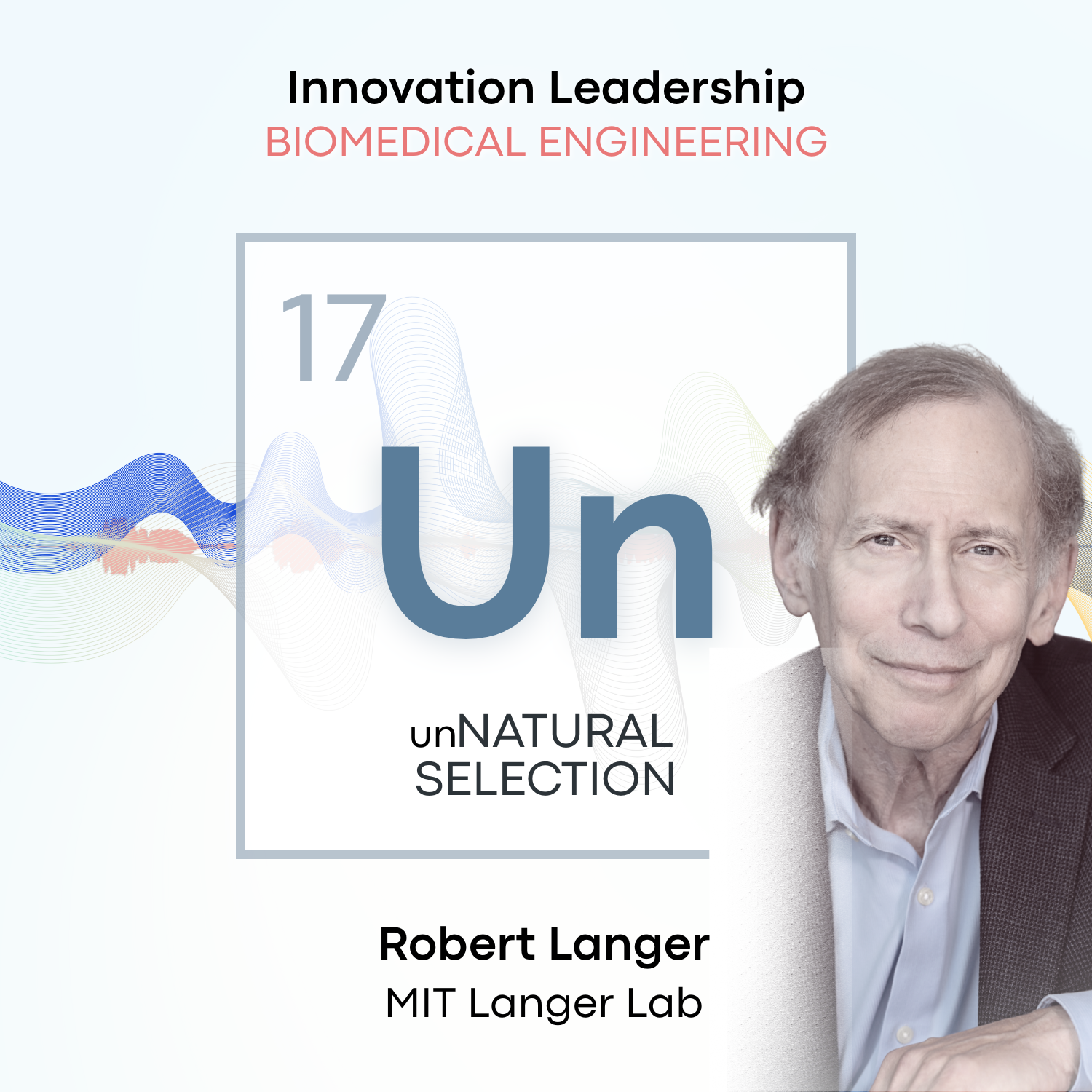
Robert Langer on Impact-Driven Innovation. Robert Langer is not just a scientist — he is one of the greatest scientific minds in human history. As the most cited engineer of all time and one of the ten most cited scientists across all fields, his work has shaped the modern landscape of biotechnology and medicine. In this episode, Dr. Langer—one of only nine Institute Professors at MIT and holder of over 40 honorary doctorates—joins us to explore how he identifies problems worth solving, builds world-changing teams, and takes ideas from the lab to life-saving global impact. This is a rare conversation about innovation, leadership, and legacy from a pioneer whose work has transformed the lives of billions.
-
(Auto-generated by Spotify. Errors may exist.)
Robert Langer is one of nine Institute professors at MIT.
Being an Institute professor is MIT's highest honor.
His articles have been cited over 446,000 times.
His h-index of 331 is the highest of any engineer in history.
His patents have been licensed or sublicensed to over 400 companies.
1:33
He's a Co founder of many companies, including Moderna.
He holds 44 honorary doctorates and has received over 220 awards, including both the United States National Medals of Science and Technology and Innovation, one of three living individuals to have received both honors.
1:49
He has been elected to the National Academies of Medicine, Engineering Sciences and inventors.
And I'm also privileged to be able to say that I was a part of one of his startups early on Transform Pharmaceuticals.
So with that, Bob, welcome to a natural selection.
2:04
Speaker 1
Thank you.
It's a pleasure to be here.
2:06
Speaker 2
I just want to get started with my general question because I'm sure people would want to hear from your perspective, Bob, but what need or impact drives your work?
2:15
What drives Bob’s work?
Well, I think it's a combination of scientific curiosity on the one hand, but also impact in terms of doing the most good for people in the world scientifically.
2:26
Speaker 2
Your impact has been so profound and so long lived.
Looking back at where things originally started, what moments or influences in your early life set you on a path to becoming not just a scientist, but such a persistent, boundary pushing innovator?
2:43
Speaker 1
Well, I think they're different things like scientist probably in a way goes back to when I was a little boy and my parents gave me these Gilbert sets, like Gilbert chemistry set, microscope set, things like that.
I think I'm actually then I think in college and Graduate School, I, I, I got very involved in teaching and helping even start a school for low income high school students.
3:10
And I think that that I got a lot of satisfaction out of that.
And I, I, I felt I was good at it.
And so that I really showed me that I got a lot of satisfaction out of helping people.
So when I talked to do my post doc work, 'cause I don't feel the research I did up until then really did help people that much.
3:32
I mean, it was research, it was scientific papers.
But then my post doc work, I think that was the next big thing, which was Judah Folkman, who was my advisor and working at Boston Children's Hospital.
And there I could see research could could make a huge difference in terms of doing things that might create new treatments for cancer and other diseases.
3:53
So I think it's a combination of those influences.
3:57
Speaker 2
When you already achieved more than most, what made you keep going?
4:02
The Importance of Personalized Medicine
It's you know, because your influence has been so disproportionate to what most other scientists and engineers do.
Did you?
Was there an inflection point where you realized that you could do this at scale versus in a linear way?
4:16
Speaker 1
Well, I mean, I don't, you know, you never know what thing you do exactly Will lead to impact.
I mean, I mean, a good example goes back 50 years to when we created the first, you know, tiny particles that could deliver large molecules like nucleic acids.
4:34
I mean, I, I thought I was excited at the time.
I thought it was an important thing, but I certainly didn't know, say COVID was going to happen or that Moderna, you know, that get involved in starting Moderna many years later and that we'd create a vaccine that, you know, ultimately, I suppose billions of people used and still use but and, and many other things as well.
4:55
But I think that that, you know, it's a combination of things over time that, you know, you try to think how can sort of a guy that I didn't know consciously when I first started doing this.
5:10
And I guess it comes more and more conscious as I got older as I, I often ask myself how with the skill sets I have, which are still quite limited.
I mean, I'm not a molecular biologist or politician or anything, but how can I take the skills that I have with their limitations and who I am and, and have the biggest positive impact on the world?
5:33
That's kind of the guy that I've tried to use.
5:36
Speaker 2
And I guess a subsequent question to that is with so many opportunities of taking your, your skills and your technologies in almost endless directions in Healthcare is how do you prioritize some ideas over others?
5:50
Prioritizing Ideas
Do you have like a framework or an intuition that you rely on when deciding which problems to tackle, especially when their time and resources are limited?
6:00
Speaker 1
Yeah.
Well, I suppose impact, I mean, I perceived impact.
That's not I'm always right, but it's perceived impact.
I mean, what will have the biggest positive effect on on the most people?
But it's a perception, it's an educated guess.
6:14
Speaker 2
Well, more educated than most because you definitely had a string, a long string of successes.
You know, I guess from that perspective with so many different kind of like shots at goal that you've taken and and many of them have actually connected of all the many technologies and therapies that you've helped bring to life, which accomplishments have been most have been the most personally meaningful?
6:36
Speaker 1
Well, I mean, first of all, I also found a lot of failures too.
I think that's important to realize.
But you know, and, and by the way, and, and this is a sort of a separate point, but but very relevant.
I often say people that are most successful are the ones that know how to deal with failure well, because, you know, success that's easy.
6:55
Failure is not, that being said in terms of I, whenever somebody asks me that kind of question, usually I say the success of my students.
I, you know, that they have done so incredibly well.
I think we've had probably 1000 people pass through the lab and they're leaders all over the world in terms of taking and making biomedical engineering important.
7:16
But I suppose if I were to pick one thing that I did just research wise, probably would be the thing that I said before, which was our 1976 Nature paper showing for the first time that you could deliver large molecules from tiny particles.
7:31
And that was important both because people said it wasn't possible and ultimately because it did make a big difference in a lot of different ways.
7:42
Speaker 2
And you mentioned all the scientists and entrepreneurs that you have in your lab.
7:48
What distinguishes the ideas that succeed in translating breakthrough science to real world impact?
What distinguishes the ideas or people succeed in translating breakthrough science and actually translating it to real world impact from those that don't?
Do you see a pattern in the the ideas that actually break out or the people that break out and and things that others might be able to do to try to achieve those accomplishments?
8:08
Speaker 1
Well, I think it's the people, I mean, and, and actually every time it's it's a team of people.
And, and, and so I think you have to, if to do translation.
I mean, a lot of times that could be moving things into the clinic.
It could be having a company, but it's, it's really a team of people that work well together that don't give up, that do because you are going to have roadblocks.
8:29
You just don't know what they are when you start.
And it's, it's just, you know, being willing to walk through walls to make your ideas work.
8:37
Speaker 2
I guess from from that perspective and I, I mean I would imagine that your lab right now is focused on dozens of different things.
8:42
What is the next scientific frontier that will have a multi-decade ripple effect on human health?
But when you've influenced different fields from diverse drug delivery, drug design as transform was back in the day, tissue engineering, mRNA therapeutics.
What do you see as an ex scientific frontier that will have such a comparable and multi decade ripple effect through human health?
9:05
What's what area are you particularly excited about right now?
9:08
Speaker 1
Well, I always say it's an area that doesn't have a name yet because it hasn't been discovered, I think is the value of basic and early stage research.
I mean, some of the hot areas right now are, you know, genetic therapies, which can also include cellular therapy, which includes things like car T cells and things like them and then regenerative medicine.
9:27
But you know, if you really just to pick CRISPR as an example, if you, if you ask somebody that question that you asked me back in 2011, nobody would have said, you know, Chris Burr of gene editing, because really the key papers hadn't been written yet.
9:43
And so I think that there's always that, that to me has been a great value of, of, of, of science that you and curiosity driven science that you can make discoveries that will change the world.
But it's hard to give them a name because, you know, like I say, they haven't been done yet, but probably and, and, and and that's, you know, if you look back at history, that's happened over and over again.
10:12
Speaker 2
You mentioned also failures, you know, I've helped start a number of companies and their successes and failures as well.
10:18
Failures and the importance of overcoming them
And I look back sometimes at things that maybe at the time that it worked, but now might.
Do you look back at any of those failures that you mentioned that you're like, you know what?
I, I still believe in that and, and maybe there's a we should give it another crack.
10:33
Speaker 1
Sure.
Well, I mean failure is, is, you know, it depends how one looks at failure.
You know, a lot of times we've created core technologies.
So what I mentioned and we've started companies and some of those companies I suppose by different standards have been failures in the sense that they didn't make money or they could have gone under whatever.
10:54
And you know, we did start nanoparticle companies, one nanoparticle company and it didn't do well, but nanoparticles of course, which is a core technology that we helped start that changed the world with companies like Moderna and Bioentech and others.
11:14
And, and I think that can often happen when you create a core technology, you know, you sometimes it's having the right targets with that technology.
11:22
Speaker 2
Are there stories of an idea company that almost didn't make it, but changed the world because you fought for it behind the scenes?
I think you mentioned in that early paper people said it couldn't be done, but you still prove that it could are.
11:38
Are there other such stories where you kind of felt that most people didn't believe that it was possible, but science proved otherwise?
11:48
Speaker 1
Well, I don't know if it's science proving otherwise.
Certainly there are companies that we'd started that and, and, and you always fight for them.
I mean, no matter, no matter what, you're always fighting for them and, and, and, and, and for the ideas of course that they put forth, at least I always do.
12:07
So I, I keep believing in them, even though ones that haven't done as well.
You know, they may get a reincarnation and, and in different ways, like the example that I mentioned.
Sometimes it's having the right molecule to put in the right delivery system as an example.
12:23
So, but I think always I believe in these things.
So I keep trying and sure, lots of times the stocks of some of these companies have gone extremely low or the company, you know, may have come close to going out of business.
12:38
But, you know, we kept trying and they, you know, different, I mean different ones that I've been involved with that that certainly happened.
12:47
Speaker 2
You said something earlier that some of the things that bring the most pride to you are the students that you've had and how you've been able to affect their lives.
12:55
Building a culture of innovation
So from that perspective, you've built a culture of innovation in your lab that's produced more successful founders than perhaps any other single academic group.
What principles or practices have you been have been most crucial sustaining that environment over decades?
Is it a virtue of who gets to work in your lab, or do you actually have methodologies or culture or processes that help nurture that and foster innovation and creativity and risk taking?
13:25
Speaker 1
Yeah, I think both.
I think one, I've been very fortunate being at MIT and I've had wonderful, wonderful students and postdocs and we do get lots and lots of applications and, and we've, you know, had the fortune of having really talented, smart, persistent people.
13:42
But I also think I learned a lot from my, the man I mentioned to back to you earlier, Judah Falkland, who was my boss when I was a post doc and he, you know, believed anything was possible.
13:58
I think that's, that's my interpretation of how he was.
And he also used what I call positive reinforcement.
Now, what I mean by that is a lot of times people would come to me, you know, like in an interview like this and they say, well, Bob, do you, do you tell people they have to work hard, you know, 'cause they see, come to my lab, they see people are working all hours of the day or night.
14:19
And do you order them to work hard?
And I say, no, I don't do that at all.
I always tell them, I'd always hope that I get across to people that if they're successful, that that will make a giant difference to the world, to a lot of people.
And I'd call that positive reinforcement.
14:35
You know, that you sort of lead by making sure that people understand that they're doing something that can just have a giant impact.
And even and, and not discouraging ideas, you know, even if it's not a great idea, you still, there's still some bright lights in those ideas and trying to get people to, to get along.
14:55
Well, I think that's also something you want to create a, a really positive environment.
But beyond that, I think that probably the environment we have, we do high risk projects.
I get I that I, I tell people failure's OK.
We have, there are also, we have a super interdisciplinary lab, maybe 10 to 15 different disciplines.
15:16
So people interact with each other and, and and I think all we all grow from each other.
15:23
Speaker 2
Do the different disciplines in your lab work in silos or are they interdisciplinary?
When I've interviewed amazing people from early pioneers at Kodak to even the tennis coach of Serena and Venus Williams, it's amazing how many parallels there are in team building, in cross pollination of ideas and training.
15:45
And, and so I was going to, I was wondering about that, you know, because academia tends to be or academics is sometimes tend to be very defensive and protective of their ideas.
And so from that perspective, it sounds like your lab is much more interdisciplinary and collaborative versus competitive.
16:03
Speaker 1
That's right.
Yeah.
We have people working in teams and so I think that that's worked.
16:06
Speaker 2
And so if we think about students out there that are maybe in college or high school and they're listening to this right now, the the world that we live in today is flooded by pressures to specialize, publish, fundraise, go viral, you know, what have you.
16:22
What should young innovators focus on today to create lasting impact in science?
What should young innovators actually focus on today if they want to create lasting impact in science?
16:29
Speaker 1
Well, I don't think there's any one thing.
I think it's it's trying to do things that they feel they have a passion for that they believe can make a big difference in the world.
I don't know that there's any one thing.
16:40
Speaker 2
With how quickly science is evolving and the advent of AI, what's the field that a person could be, could have an impact, a lasting impact and be competitive in a world that's going to be digitized so fiercely over the next, you know, few years and decades and beyond?
16:59
The future of AI
They're there particular areas that you think lend themselves more to that human AI partnership in developing right now?
17:08
Speaker 1
Well, AI is something that can be useful in almost anything, but I still think basic biology, basic chemistry, basic physics, basic engineering, I mean, those are those are really all key areas and, and, and asking big questions in those areas is I think what's going to be important.
17:29
Speaker 2
If we think about the, the, the pace of innovation that your your lab has been in and it and it crosses so many different disciplines, how do you stay engage in all these different projects?
Is this something that you stay very engaged in kind of like day-to-day, or is this something you're more a little bit hands off and check in periodically?
17:52
How do you how do you guide that development towards a field that, given your perspective and your vantage point, you can advise in the direction that things develop?
18:01
Speaker 1
Yeah, I, I'd like to think I do both.
I mean, I, you know, I get tons of emails from the students, meetings with students.
I often have relatively short meetings rather than long ones.
We have seminars and get togethers.
But, you know, and, and, but I still feel like I'm not a micromanager by any means.
18:21
I've, I'm, I'm sort of more somebody who tries to ask big questions, turn get great people, turn people loose.
And and and and so I'm.
I'm not I'm I'm sort of the opposite of a micromanager.
18:34
Speaker 2
And are are there any specific areas right now that draw your attention more than others that are you're working in your lab, things that you're particularly excited about?
18:43
Speaker 1
Well, I, I'm excited about all of them, but I mean, right now we're doing a lot with the Bill Gates and the Gates Foundation on creating new medicines and new delivery systems for, you know, the billions of people in the developing world.
We're still very active doing a lot of work on nanotechnology for delivering, you know, different, different types of genetic therapies.
19:06
And we're doing a tremendous amount of work in this whole area of tissue engineering and regenerative medicine to make new tissues and organs and make tissues and organs in vitro, you know, like on a chip.
19:18
Speaker 2
When new technologies and medicines come out, they typically cost an extraordinary amount because of all the R&D that goes into them.
19:24
How to rationalize the effort to build new technologies and make them accessible to the developing world
And then over time they diffuse through society.
You mentioned that you're working with the Gates Foundation right now to be able to deliver some of this to the developing world.
How do you rationalize the the the effort that goes into building it, but then also making them equitable and accessible around the world?
19:42
Speaker 1
Yeah.
Well, I think first you have to prove that you can do it.
And a lot of these things that we work on, a lot of people would say, you know, wouldn't be possible and and yet I'd like to think we've made them possible.
Then you and and accessibility is it comes in a number of ways.
20:00
It's obviously cost is, is one of them.
So you have to, you know, make them, you know, you know, with materials that are inexpensive enough.
But there are other challenges too for accessibility.
A lot of times they have to be heat stable.
The environments are very, very different.
20:17
And then of course, there's things that, you know, that people, I think like the press in particular that happened with the vaccines.
I mean, a lot of the things did get to the developing world, but they didn't have the infrastructure to get them to the patients, to get them to the people, you know, the roads, the everything.
20:39
And so I think that that's something unfortunately that I can't control or I can't do other than the fact that we are also trying to help several different groups in Africa, different countries in Africa, IT with biotechnology companies and trying to help train their students.
20:59
So I, I, you know, to cause ultimately you have to have the countries themselves, you know, realize these things and, and, and, and so we have been trying to help on, on, on all those fronts.
21:12
Speaker 2
Yeah, it it it this definitely resonates with me.
So it one of the things that I run right now, I'm a president of the international consortium.
I'm a newborn sequencing.
So we bring together all of the leading researchers that are bringing genomics to newborns and doing it at scale of population levels.
21:30
And a lot of the leading countries there are your typical US, European countries, Australia, but there's a lot of talk about how to make this as accessible around the world and equitable as possible.
And very much to your point, you have to be able to enable countries to do it themselves.
21:46
But then they're also infrastructure challenges.
There are cost issues, training issues, and so on.
I'd be very curious to know how the work that you're doing develops and and how some of the learnings there might affect other fields like newborn screening and genomics, because it's a universal problem that's still requires A scalable solution.
22:12
Speaker 1
Yeah.
Well, I'm, I'm not an expert in, in, in, in those areas, but I think if it's a, a, a product that like a drug, then you can like I say, try to make it inexpensive enough, try to make it maybe that you only have to take it once.
22:27
We've worked on those kinds of strategies and we've been I'd say scientifically successful on those.
Then you also need manufacturing.
I think to your point, I ultimately think to really get things to be successful in broad areas, especially new areas, you have to have education in those countries, you know, where people take the initiative, whether it's building companies or at the universities or high schools or I, I think.
22:53
And so that's why I've tried to do that as well.
22:56
Speaker 2
What's your perspective on EU s s competitive position when it comes to science and technology over the coming years or decade?
23:06
The EU’s competitive position in science and technology
Obviously, a lot of changes.
I'm at Harvard and we're experiencing some some challenges right now.
And I see other countries, China and others investing heavily in, in AI and genomics and many other fields.
Do you, are you bullish on EU s s opportunities going forward?
23:25
Are you concerned?
What's your perspective on where the US stands right now?
23:30
Speaker 1
Well, I, it's, I mean, overall, I'm always bullish on the USI think the US attitude of, of risk taking, of entrepreneurism, as, you know, curiosity driven research.
I think it's, you know, done terrific.
23:45
And I think that that's really enabled the US to be where it is today.
I do think that attacking, you know, cutting out grants, you know, making life more difficult at the universities, I think you can already see, you know, out some outstanding scientists, some outstanding, you know, undergraduates and graduates go to overseas universities.
24:09
So I, I think that will take a hit.
But I'm still, you know, because of some of these policies.
I, I again and, and, and and so forth, but I still believe that the United States will do great because you know, of the kind of culture it's had for the last 250 years.
24:26
And so I'm still overall optimistic, but I think, you know, we'll maybe be a little less than less great than we were.
24:33
Speaker 2
So, Bob, we started with questions about your early upbringing and the things that influence your thinking and your approach to science and technology.
24:40
What Bob hopes his legacy will be
As the last question, when people look back 100 years from now, what do you hope your legacy will be, not just in terms of inventions, but in how you shape science, health and the people who followed you?
24:52
Speaker 1
Well, I hope my legacy will be that that I'm someone who, you know, really changed the field built, helped build the field of bioengineering, biomedical engineering, and, you know, trained several generations of, of, of great scientists who collectively, along with myself, you know, made inventions and discoveries that, you know, made a big impact on not only science, but on human health in the world.
25:22
Speaker 2
Well, I can say first hand that while I was a part of helping launch one of your companies at this point, well, 25 years ago to 2000 was in transform.
We started it and it's been really such a privilege to to know you.
You are an incredibly kind and generous person.
25:40
And I've seen that with so many people that I work with you in your labs and in your companies.
And it has been truly an honor to have been a part of your successes and also to have you here on this podcast.
So with that, thank you so much, Bob, for being a part of Unnatural Selection.
25:57
And I hope that we can talk again sometime soon.
26:00
Speaker 1
My pleasure.
Thank you so much.
Great to see you.
