

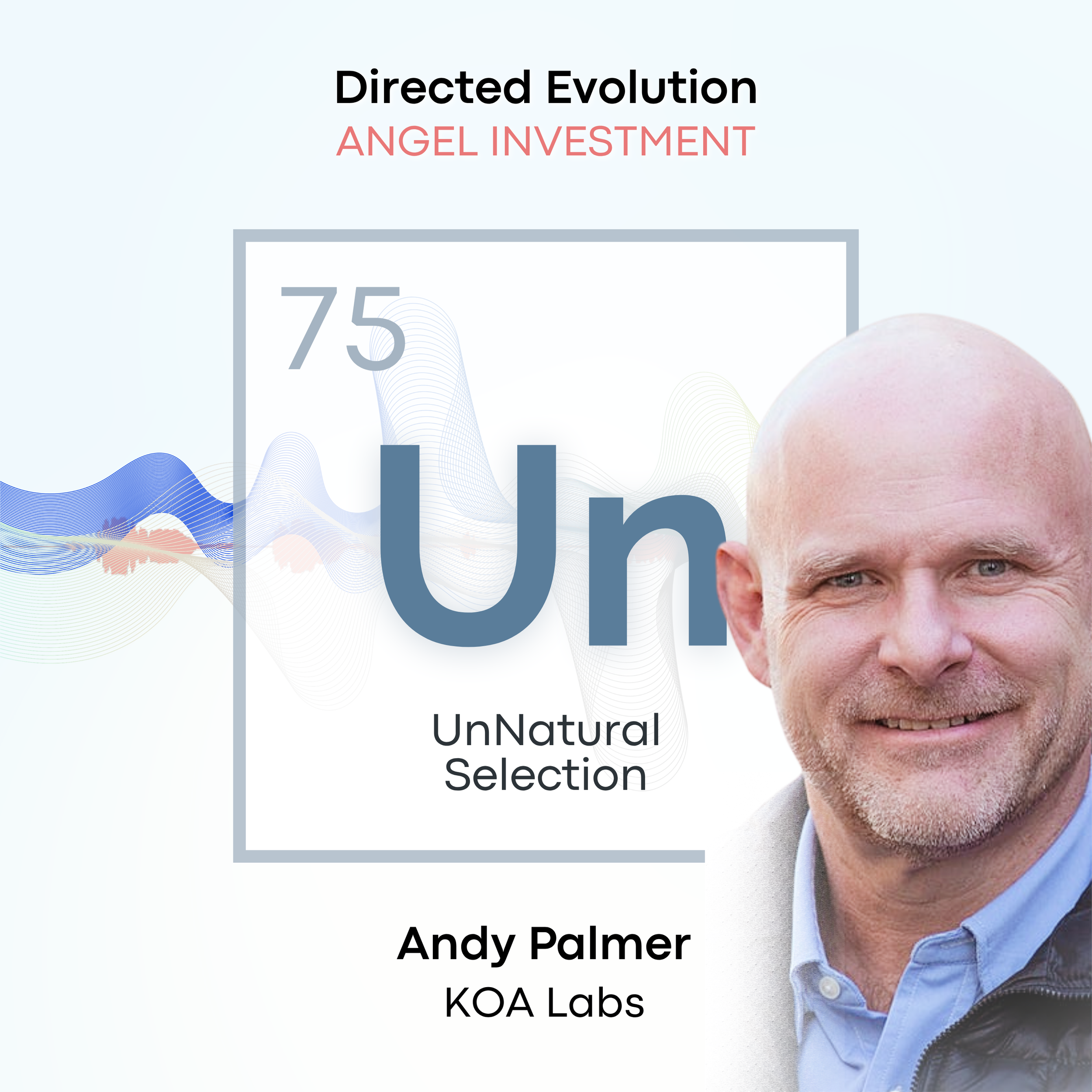
Directed Evolution
What determines which innovations survive - and which simply consume capital?
Andy Palmer, entrepreneur, operator, and investor at Koa Labs, joins Nic Encina to examine the human and organizational forces that drive meaningful innovation.
From identifying resilient founders and empowering rule-breakers inside large companies to applying AI in healthcare and education, Andy argues that the next frontier isn't better technology alone. It's putting existing capabilities to work against real human problems.
In this episode:
Why entrepreneurial resilience is scarcer than venture capital.
How consensus can suppress breakthrough innovation.
Why AI's hardest challenge is human adoption, not better models.
How incentives shape behavior and determine system outcomes.
Why transforming entire systems can create more impact than building isolated solutions.
The UnNatural Signal: When technology becomes abundant, the ability to apply it to human needs becomes the differentiator.
Because progress isn't just about what we can build. It's about what we can change.
-
Nic (00:00)
Andy, it's great to see you, man. Great to see you too, Nick. You know, when I have these interviews, a lot of times it's kind of like, nice to meet you, great to have you on board, but you and I go back.
23 years. Yeah, it's long one. Right? It's like we've known each other longer than we have it. And so it's such an honor to have you here and you know we've known each other obviously for such long time and I've learned so much from you that it's actually it's a privilege for me to have you on the show. Wow, I really appreciate you having me. Yeah and I think we have so much that we can potentially unpack as well but you know what I like to do is first level set
with the guests and telling us in their perspective why they do what they do. And so could you just really get started by just letting us know what need or impact drives what you do? Yeah, well, I've always been a computer nerd.
junior high school kid writing computer games and have always been fascinated by computers and I'm still amazed that
And I was really fortunate. I got to do some work in AI.
It was really exciting, even back then.
day.
You know, most of my juice comes from working with young people that are interested in starting companies that are at the cutting edge of...
And I really get a lot of reward. Most of my career I spent starting companies from scratch. A little bit of a maverick. I like to break the rules. And so when young people are starting companies and you know have an important mission and want to make the world a better place, it's very natural for me to try and get behind them.
We backed almost exclusively first-time entrepreneurs, so a lot of them are relatively young, with technical or scientific backgrounds, kind of like myself. And then about 80 % of the founders that we backed come from underserved communities, women, immigrants, and people of color. And so that has given me tremendous reward in watching so many of these talented young people become successful.
Yeah, and could you tell us a little bit about what COA does because it's like, it's not just an investment firm, you have a lab, so it's not quite also an accelerator or an incubator, it's kind of like a combination of all those things, right? Well, it started off like that. Okay. As I've gotten older and it's kind of moved into a semi-retired state, it really is just a holding pen for all the things that I'm involved in, in some way, form. So now at COA, we have...
75 companies that were invested in directly and then in the last five years Since my granddaughter started showing up I've stopped direct Direct investing in new startups and instead have been putting money into other seed funds. So I'm a limited partner
most notable of which is Founder Collective, which is also right here in Arbroot Square where I live. And do you still have companies within Coalives like The Space? No, there's no more space. The beautiful thing, like here in Boston we have the CIC, the Cambridge Innovation Center, started by Tim Rowe, who's a close friend, and CIC is amazing, right? of course there's WeWork and Industrious, plenty of places for people
Yeah, it makes total sense. Well, plus also like COVID changed the work environment so much that a lot of things can be done virtually at this point. why take up that space? And in COA, as your bio says, you mostly focused on like tech intersection with life sciences, right? And healthcare. Yeah, it really, for me, through the 90s, I did mostly internet, e-commerce kinds of things, you know, with a strong.
And then in the 2000s, I really believed that I had built a lot of software, sold a lot of software, made a bunch of money, but how's the world any better or different? So when we started working together at Infinity, my interest was trying to become involved as a tech person in companies that had a powerful mission.
It was a lot of fun doing that together at Infinity back in the day. And ultimately that inspired me to go over and work with my friends at Novartis, Remy Yvar, Brent Sanders.
tremendous fun. Through that journey into the life sciences and especially cancer drug discovery and development, I sort of realized that there were all these problems in our healthcare system that really weren't about fundamental science or even sort of crazy innovative tech, but actually were just like, you know, solid existing tech and science applied to making a difference in the lives of patients. And ultimately that led me to primary care.
which my partner, Rushika Fernandapoli and I.
We have a company called Lysa Health that we're working on now, which is AI forward.
excited about the potential for AI in massive.
And Roshiko, know, no one better than to work with him on primary care, right? mean, he's been through the wringer there and he's done it a few times. So, you know, so when you look at that space of like healthcare and life sciences and technology, as you mentioned, there's just endless amounts of problems that can be fixed.
And so when they come your way, you still as an investor, and you invest both your time and your money, you still have to differentiate between what makes a good investment generally, but also a good investment for you that you want to spend your time and money on. Can you take us a little bit through what your psychology and your strategy and your thinking is when you see an opportunity, if it makes sense for you, you jump into it? Yeah, well for me, it hasn't really been about money for a long time. So when I started investing directly in companies, I thought of
is kind of a hole in the ground. Like honestly, seed funds are really a reflection of the assets that they contain. And most startups fail. Like the reality is you get, you know, two, three out of a hundred.
was a good run, like during the 2010s, there was a lot of liquidity.
don't change that much over the years and so you know you can really count if you do a hundred
some you know a decent return but but you really have to be willing to tolerate failure and so for me at coa it was about always about the people and their missions and the things that they were trying to accomplish and it really wasn't about the money and we've been really fortunate you know
again that created a whole bunch of money that needed to go somewhere and so you know instead of direct investing you know I'm really not a venture capitalist I'm really an operator and builder and so instead of investing more money in companies
great, really great seed funds that do a
things to invest in, over time. Interesting. So if you take money off the table, then it really boils on to like a gut feeling. Does this mission align with what your principles and values are? Yeah, and the humans involved. you know, there's a standard distribution of humans and risk profile, right? We're not all wired to do the things that people like Steve Jobs or Bill Gates or Elon Musk do, but there's some of us that are kind of wired.
shifted more towards that sort of risk profile. But for a lot of people, they're just not meant to be entrepreneurs and take these crazy risks and do all these unnatural acts. And the discomfort associated with being an entrepreneur is extreme. And what happens when we have a positive economic cycle, macroeconomic cycle, like we did in the 2010s, lots of people start companies because they're like, well.
And there's tons of money. Yeah, tons of money. But almost always, even if they're able to raise a ton of money,
it's hard in some way. And it's always hard, and it's always different, the ways in which it's hard. And so, entrepreneurs have, true entrepreneurs are great ones, they have to be massively resilient, like incredibly impervious to failure. And one of my favorites is this incredible woman, Dulce Mad.
And she's just, you know, she's impervious to failure, right? You know, it affects her, but you know, not nearly like what affects kind of a normal human being. And her persistence is truly incredible. She has a new company called Dig Energy. They're doing home-based, you know, geothermal power. And it's like crazy cool stuff and crazy innovative. But the number of Dulce Maddens in the world is like, aren't enough of them.
That's the constrained resource despite all the money that's gone into venture capital. If you look at like the peak of venture...
was seven times what it was in the peak in the 1990s. And so you have to ask this question, well, are there seven times more great entrepreneurs, seven times more great opportunities? Well, maybe, but seven is a lot. Maybe there's double or triple the amount of entrepreneurs than there were before. And so inevitably you're get a bunch of money.
Yeah. And so do you have a way of being able to identify who has that grit when a new team comes to you with an amazing technology, the mission is there, but ultimately in your savvy, experienced investor, you have to look at the team and be like, are these the ones that are going to make this change? Yeah.
How do you identify that in a person? Especially because, sorry to interrupt, you said most of your investments are new entrepreneurs, right? So it's not like they have a track record. That's right, yeah. You have to, almost always tend to look and this was...
tend to look at things that other things they've done in their lives. you know, because when you've got this kind of a risk profile, it's like who you are as a human. And one of the fun things for me about startups is that you can't really separate the personal and the professional. Like who that human being is in their personal life, probably the same on the professional side. It's not like separable. And so you look for people that have taken big risks just in their life and what
Like for me personally, like when I was a freshman in college, I decided to switch from playing football.
a sandlot sport back then, but I loved it. It was really great. And the risk I took, despite my parents' advice and all this kind of thing, to go and, you
to go play a game that none of us really knew how to play was like you know there's an early indication that I
Yeah. And do you look for other, obviously like a risk profile in perseverance, any other things that you think?
And at this point, you've worked with so many entrepreneurs and you're one yourself. What makes a good entrepreneur beyond the risk profile and tolerance for failure? What are the kind of things that you look for for people that are gonna really make it? Because at the end of the day, entrepreneurs are trying to change the world. Change the frickin' world, right? So it's not like a trivial thing to do. So there's gotta be, do you look for specific things? You're like, this person's gonna make a good entrepreneur. Yeah, they have to have a mission that they really believe in.
capable of embracing that mission as their life's work, really. And there's so many great examples of this, but one of my favorites recently is my old friend, Joe Lemont, down in Austin, Texas, that started the Alpha Schools. And Joe and Mackenzie Price, his partner, are building, truly, the next generation of education in this country. And they've done an amazing job along
10 or 15 years of proving that AI forward primary and secondary education is many orders of magnitude better than traditional teacher in front of a classroom 10 year based education. when you see this happen and you watch you know what Joe's been doing over the last 10 or 15 years with McKenzie it's truly remarkable and the potential to improve education is
And so Joe is just a little more.
But, you know, he's still innovating at this level, right? And his mission now is incredible.
AI for
So there's the entrepreneur, there's also like the I word, intrapreneur. And there's this conversation about intrapreneur, entrepreneur, what are the overlaps? It's like a Venn diagram, right? There's a lot of overlap, but there are some fringes there. And I haven't really asked anybody this question before, but you and I have both been across that aisle, Entrepreneur starting stuff, but then also starting stuff within.
big, calcified organizations. Me at Harvard, that's very calcified. So, you know, do you see a difference between an entrepreneur or entrepreneur? Is there a difference? How do you see that perspective? You know, because you've done a lot of innovation work at a place like Novartis. You've run big organizations as well, and I'm sure you like those people that are willing to break the rules to a certain extent. How do you see that kind of balance between intra and entrepreneur? Yeah. Well, I don't like the term entrepreneur.
know, entrepreneurship is a thing. And it's kind of distinct. When you go and you start a company from scratch and you don't know how you're going to pay yourself or anyone.
The level of risk associated with that is so different than someone that wants to be innovative and is inclined to do innovative things and is willing to kind
But that person in that big company is still getting paid. They know that.
And so it's massively different, right? And so I don't like the association. I think it's kind of like a false thing. But in big companies over and over again, I've seen people that do things, and it's kind of what I was doing at Novartis. But my favorite example is my friend Olivier Delabor.
smart, crazy, innovative. And the job that Olivier did at Ayrton Key for a long time, he described it as being a buccaneer. And a buccaneer is like a pirate with a mandate from the king. And I think inside of big companies, it's really healthy to have some population of individuals on the team, especially the leadership team, that are willing to kind of go break rules. They're not.
focused on consensus, Because consensus thinking inevitably sort of dilutes the most powerful things. And oftentimes the biggest opportunities are not things that everyone would agree on at the very beginning. You don't have to go any further than
And you talk to people like, know, here in Boston, there's some great entrepreneurs, like Langley Steiner.
those are cargaroos and...
Another great example. And one of the things that, especially Langley talks about a lot, is this idea is like when you really want to do something massively innovative, you have to look for assumptions that people have. Again, Uber and Airbnb are the obvious examples.
stay at your house, right, for some fee. know, sort of random people off the street. It's before those companies existed, those assumptions about what was acceptable or not, and what was possible or not, were massively different than they are today. And so the best people that are trying to be innovative, the most powerful things are when you look for places where you have these assumptions, and there's some change in technology, or there's some sort of, you know, stars are aligning that enable you to
massively change that assumption. But it's really hard.
it was to get through all the legal morass associated with the lobbying of the taxis. Societal infrastructure is built against you. That's right, exactly. And so these humans that rail against that, and again, entrepreneurs, start companies to go do that, and usually, hopefully on a really big scale. And the people inside of big companies, again,
right? But people work in big companies for reasons, Oftentimes it's security.
It's very different thing than throwing caution to the wind.
Yeah, no, I see that. Yeah, it's a, I think there's a need for both of them, but I agree, like putting them on the same level is very different because the risk profile is radically different. And tolerance of failure. Like if you're in a big company and there's a lot of consensus, humans like positive feedback.
fail most of the time. And you don't get a lot of good positive feedback. You don't have a boss saying like you're doing great keep it up. That's right. That's right. People like to look at entrepreneurship and they look at the companies after they're successful. Yeah of course. You talk to any of these successful entrepreneurs like they'll all like give you the stories of how difficult things were. yeah. How challenging it was in so many ways. And so you know you know if you really want to be an entrepreneur you got to embrace the embrace the hurt.
Any uncertainty. right. Yeah, I mean, it's like, you know, like professional sports. Nobody's writing a documentary on the thousands of basketball players that didn't make it. That's exactly right. hear about the Kobe's and Michael Jordan's, you know, those are success stories and everybody believes they can become that. But for every Michael Jordan, there's like a million other kids that went nowhere. But like nobody's hearing that story. But they took a risk. Yeah. And when you talk to those, you know, high performing athletes like
to failure.
great examples of been into tennis, I know you're into tennis. There's so many great examples of this in tennis where you
They lose a lot, you know? Remarkably. Like 49%, you Like if you look at Federer, right? He didn't win more than like 49 % or 51 % of points. Right, right. But the reality is, like, when it really matters, and it's those critical moments, like, they step up and they over perform. And also, they're persistent. They just don't stop. I mean, it's made of these tennis players on the top tier circuit. Like, the amount of tennis they play is astounding. Yeah.
It's interesting, know, as you talk about that and then equated to entrepreneurship because one of the people I interviewed last year was Rick Macy, who was a former coach of Serena, Venus Williams, Andy Roddick, Maria Sharapova. And he said, one of the biggest differentiators as to whether you're going to be a great tennis player or not is your ability to forget the last point. Yeah, that's right. So, you know, learn from it.
but put it behind you. It can't be like a sandbag for your next point because it doesn't help you at that point. You've got to be able to drop it. And the correlation with entrepreneurship is so stunning here because you're saying the same thing. You're saying you've got to be able to move on from your failure. You've got to have the resilience. You've got to be able to keep going and have that perseverance in the face of unlimited.
risk, but the ones that become the best ones are the ones that you kind of like put that behind them and move on to the next challenge. Yeah, it's often hard for like there's certain types of software engineers that work
There's a certain type of software engineer that's capable, because it's an engineer. You're not wired like that, right? You want to make sure the thing you're building is going to be the right thing to allow before you put all this effort into it. But there are many engineers who are sort of capable of working in certain, where they build something and then it doesn't.
You know, and that ability of an engineer to have that mindset of both be capable of building incredible things that really are meant to last and also not being afraid of those things, you know, sort of failing.
I would imagine a lot of it is also different product development methodologies, right? So back in the day, was a lot of waterfall, which it made sense. Like this thing's got to be bulletproof as they build this nuclear submarine. And then Agile came around all these different methodologies that changed the mindset. It's like, let's take smaller risks, especially in an environment where we're innovating.
And so, you if we think about the people that might be listening to this and they're having aspirations to be an entrepreneur, or maybe they're within an organization and thinking to themselves, how do I become an entrepreneur? What advice would you give them? I know that you've written a book on of like some of the mentality, right? Yeah, live for a living. Yeah, right. Yeah, my personal...
It was really intended for young people that are considering.
thing when you're young is you don't really know what your risk profile is yet.
kids that are coming out of college nowadays, the thing I hear over and over again is they kind of want a playbook for their career, similar to the playbook that they ran in their education, right? Where they kind of knew if I take these classes and I do well on these tests, then I'm gonna go to the next level and blah, and over and over again for me, great careers are not like that. It's a journey. And when you start your career,
experiments and learning the things that you don't like, you're figuring out what you're good at.
And you're sort of, gotta be willing to run these experiments, especially in your 20s, and hopefully take more risk rather than less when you're younger. And through that process, you develop a picture of how much risk you're willing to tolerate.
is ultimately what guides you to things that are more interesting.
You know, there's a lot of talk about how that mentality is more important now than ever because what worked 20, 30 years ago, which is you go to school, you get a degree, you come out, become a professional, and then your life is kind of determined from that point on, that doesn't really apply. Like, there so many kids coming out of college struggling to get jobs, right? Yeah, right. And also, a lot of younger people now, they're deciding not to go to college. And either going into the trades or, you know,
skilled in math and computer science, pick up a computer and they start.
Teal Fellow, Peter Teal kind of path. We used to do a lot of that at trilogy where we would encourage people to kind of, if they were really good.
But what's right is the beauty of where we are now. I'm a bit of an optimist.
for young people to create a work life that is tuned to what the things they're interested in and how much or how little
is really essential. My oldest daughter is a...
And she travels all over the world, on a regular basis. Every other month she's in a different country. And in the process she also makes a lot of money and gets all her work done wherever she happens to be. Good for her. Sounds like a great life. It's amazing to me. I'm so inspired by her. And so this gig economy thing is actually becoming mainstream.
I think it's a much healthier way to view work. And I think also bigger companies are more open to it. 20 years ago it's like where'd get your degree from? What were your grades? And so now it's like, I mean it's just amazing how quickly society has changed during our tenure, right? I mean things that you and I would have taken for granted 20, 30 years ago, the rules are different now. Yeah, yeah. And in some ways like these core things were all...
I don't know if you remember this, but way back at infinity, you in the day when, you know, Steve Holtzman and I
citizen ownership. Right, exactly. And we always used to say like when you show up at Infinity you sort of check your titles and your degrees at the door. Yeah. You know and because we got a lot of work to do and we're do some work and the people that are most interested and best equipped to go do the work, you're go do the work.
school A or B. Not only do I remember, I think it's affected the rest of my career because I think it affected me so much that everywhere I've gone people are like what title do you want? I'm like I don't really care about the title and I think in some ways it's great and other ways I'm sure it's hurt me. But I really like I'm like I don't care about the title like what are we gonna do? Titles are just labels.
And he was like, well, know, I'm the CEO of this big.
CEO of this small company called Tamer. And I have like 100 people working for me. And how many of you people think that these jobs are the same or different? And everybody's like, not the same job. Well, we're both CEO. So basically, that title of CEO is just a label. That's it. Yeah. Let me adjust this thing.
So one topic that's come up a couple of times here is artificial intelligence. talked about alpha and also we've talked about kind of like the displacement of jobs and just society, how it's evolved. Obviously we can't ignore that and also it's a big part of what you do, right? I you've always been at this intersection of technology, life sciences and healthcare and that's an area that's being disrupted significantly in very positive ways by artificial intelligence. Can you tell me a little bit about like your thesis for where we are and how that's evolved?
over time and you've done this, you to be clear, you've been involved in this for way before the LLM world, right? I mean, there are waves of AI, there are waves of disruption, you and I have lived through like the browser time, everybody had a browser strategy and then the mobile strategy and all these things. Now there's the AI wave, which makes a lot of sense, but before the LLM phase, were, I mean, AI has been around for 50 years at least, from a theoretical standpoint, and machine learning has definitely been around for a while. You've started companies
in the AI technically space with different twists, right? So you've been in this space for a long time. How do you think about this new evolution and what it means for healthcare? Yeah, I mean it's really thrilling first and foremost, right? This round of AI.
The key, I think, is to differentiate between what are the technologies that are
generalized way, you know, like Transformers when they were first, you know, sort of being worked on it.
focused on Google Translate, and that was really the target. And now Google Translate is amazing. I don't know if you've used it recently, but they just integrated Gemini into Translate. And it's truly like Star Trek's universal translator. It is remarkable. And then it's been generalized now to these kinds of patterns to do lots of things. It's mostly just math and statistics, a lot of cheap compute, and a bunch of data. But.
we're at a stage where we have to kind of focus more on the application of these tools and technologies for humans. And you know, on the personal side, lots of ways that the AI can help. There's a huge adoption going on right now.
chat GPT and all.
Consumers are going to chat GPT at the rate of like 40 million a day and asking medical questions, personal medical questions, often uploading some of their medical.
And to be, people were doing that with Google before. Yes. To mix results. Yes. And it's hard, like for those companies it's a very delicate balance because like where do you draw the line for actually.
It's an expression by consumers of their desire for more and better healthcare. And we need to respond, especially here in this country, by embracing that demand and that desire. But it's very important that...
that we use the power of the machine as much as we can, and also carefully titrate in human advice. The role of doctors, nurses, medical assistants, physician assistants, very, very essential. And we haven't yet built the guardrails and the very careful systems to integrate humans into the process of helping people with their health.
really need to focus on that. This is what Rashika and I are really, really focused on at Liza Health. But it's hard. It's at the very beginning of this process. It's a really challenging set of problems to solve, but also we're standing on the shoulders of all this great horizontal technology, much of which is good enough to do a lot of what we need. But when it comes to adoption of systems and adoption, new adoption, oftentimes the last mile
is the real challenge. And so the challenge in AI now is not better models.
Those companies are focused, the AI companies are focused on those things, but the real challenge is at the face of the wall with the human beings and figuring out what those humans need in order to actually make those conversations useful in their lives and also to make sure that we do no harm. It was very important, like back at Google in the early days, that was a very kind of critical, you know, sort of optic that they
sort of artfully sort of craft these experiences for people especially in healthcare that
Yeah, and
Innovation becomes this thing where it's, know, innovation for the sake of innovation just becomes almost noise. You know, when it comes to healthcare, if you're going to do it in the way that you said, in a way that's responsible, in a way that's ethical, in a way that's actually useful, you've got to start with identifying what problem you're trying to solve in the first place, right? And then, and then once you identify that, you start applying tools, the right appropriate tools to solving that specific problem, work our way backwards, and eventually get to the implementation
final mile which is how do you get people involved in this process right? Yeah and the challenge we've got now that's exactly right the challenge we've got now is that there's so much money that's now gone into AI and in those companies you have a lot of people that are focused on
technologies but more on the how.
things and how they work almost becomes like a self-fulfilling focus. That they're just obsessed with the models and they're obsessed with the compute and they're obsessed with how it works. And again, we've made a tremendous amount of progress. There's a lot of room for improvement.
shifted the y.
do these things, AI technologies exist?
live their lives better, do their work faster, all these kinds of things. And so it's the human context I think that's most important now, and the application of the AI that's essential. And by the way, when it comes to startups, I believe that's the best place for new entrepreneurs to focus, right? All these technologies, very, very available, cheaper by the minute, and taking the core horizontal technologies that exist in the world from Google.
soft and Amazon.
So that's really powerful stuff. And even the tooling associated with doing that, one of my favorite tools currently is Figma's got an AI system called Figma Make, which enables you to go from designs to like a system really quickly and to massively iterate on those designs. And we both know how important that kind of agile design is into building something that's really good and important. And so when you grab a hold of Figma Make,
Yeah. Yeah, it's a...
How do you see this AI playing out in healthcare over time? Because it's incredible what it can do and a big part of the value that I see right now is eliminating some of that manual work that humans have been doing for a long time that in theory we're better off for not doing. Let's talk about doctors, right? The less they spend time in interpreting scans or in data logging and taking notes and all that, the more they can spend on the human aspect, which is actually taking care of patients and that part that
only they can do. how, and we're in such an early phase of this AI application. mean, let's open AI opened up its doors and went public with their technology what, two years ago? Right, and so like it's developing very, very quickly, but you're so immersed in that space. How do you see this unfolding? I mean, you're in primary care, you're also involved in...
newborn genomics and the NICU level for diseases and education. How do you see this unfolding? I'm not gonna say five, 10 years because who the hell knows. But you know, over the next six months, a year, what do you see? I think the best thing in, so we have a lot of challenges in healthcare. For me, many of those problems are sort of rooted in the payment model of fee for service. especially in primary care, fee for service is an infection.
And I think.
fee for service out of primary care. And Roshika and the team at Ayora proved that if you remove fee for service and focus on, you know, per patient per month kind of fees, that's relationship based, advanced primary care, longitudinal, that you just like everything gets better. When doctors are being paid on a monthly basis and their incentive when that happens is that they just care about making you healthier.
And because the more happier patients and healthier patients that they have, the easier their job is. And it's rewarding to them to have these healthy patients. Whereas if you pay physicians based on the number of meetings that they have, number of transactions that they have, well then you get this very, very hyper idiosyncratic interactions that don't really address them. And most of what happens in primary care is a
helping individuals figure out.
And again, of course, fulfilling their basic needs. So there's all these challenges in healthcare, in primary care, and the opportunities to use the AI is really essential. But I think what we have to do is focus again on the individuals involved. It lies over really focused on shared care plan.
function in primary care where the patient and the doctor agree, hey, this is the plan that we're going to execute. And for the patients, the things they're going to do every single day to try and improve that. So the doctor becomes a little bit more of a coach. A coach, for sure. Yeah.
That's, you know, the machine can play a really powerful role in doing that. And, you know, if you look in other places like in inflection medicine, what we're doing is trying to help neonatologists who have undiagnosed babies in the NICU.
using a whole genome sequence that's developed, that's implemented very rapidly within days rather than weeks, and then delivering to the neonatologist results in clinical guidance based on that whole genome sequence, are things that might be, additional things that might be wrong with that.
with the power of the machine, the power...
That's very powerful. We're doing it very, very focused, right? It's not this sort of like pie in the sky, wave your hands, know, transform, no, no, no. We're trying to help neonatologists and their undiagnosed babies every single day. If we can do that and use the machine, you know, as required, then, you know, that feels really good and successful.
all feel like.
of the company. I mean it's so much easier to measure success when you're so focused too right? Yeah. Because now you know what challenge you're ahead of it has real numbers and if you move the needle a little bit you know exactly how to quantify that. Yeah that's right and it's sort of it's like that you knew because you never have enough resource for whatever your ambitions are and so you're always trying to figure out how
that scarcity creates clarity. we really embrace a big mission and then you look at the resources.
Yeah.
So it's interesting, you when you think about really well-known entrepreneurs over time like Elon Musk, you know, he has a thesis which is kind of like, a lot of it is around energy, right? You know, like Tesla and solar power and all these different things that he's doing. The trend that I'm seeing with you, of course you've invested in a lot of companies, but the big ones that you're involved with right now, Inflection, Alpha, and the primary care one.
It's starting to look to me, and I don't know if this is by coincidence or if it's a grand plan, but like a lifespan and really being able to improve a human life at scale.
from the very beginning, which is like, let's identify what this is. Let's get ahead of some of these diseases with inflection at the newborn stage, education, you know, and how to improve that process. And then all of that boiling into a primary care, which is that how do we build these coordinated plans where your doctor becomes a coach in a way that's not addressed towards a transactional, let's fix this problem, but actually let's work together to avoid the problem in the first place.
You know, you, yeah, I think that's right. And if you look at the amount of resource at this society level that's going into artificial intelligence these days, I don't think there's any way to justify that level of investment unless we make a huge difference in how we.
efficient, much more effective, and improving human health.
The scale of investment is so large.
it comes some companies that make some people that makes money that's not good enough like we have to justify that level of investment
society.
And so apply AI in healthcare and education.
And if we come out of this, like having achieved that, it'll be a massive, massive better world that we both live in. Yeah, I agree. Yeah, and that applied word is key, right? I mean, really back to, we know there's a lot of stuff broken in healthcare. How do we go after that first, right? Let's not do this kind of like boil the ocean and cure cancer. I mean, we need people working on that too, but there's such low lying fruit that can make things really, really much better.
right off the bat. if you look at healthcare, the existing sort of ecosystem.
outcomes that are mediocre at best relative to the...
than anywhere else in world. But the existing system is not working. But the real advantage we have, we don't have a lot of advantages here, but the one advantage we have as a society in the US, we love to innovate. We embrace startups. And so it's time now for some number of this next generation of health.
massively change the dynamic. it's going to be, if it's done well, it's kind of order of magnitude more impactful than Amazon was in e-commerce. But the way that Jeff Bezos and Amazon did this, they just built a
to kind of get through that and in the process there's tons of innovation that happened but they didn't go they this wasn't like going inside of Walmart or sell a system to Walmart that made
It was like went out and they did it, fully vertically integrated the whole way. Again, when you look at what like Joe and Mackenzie are doing at Alpha, fully integrated, fully vertically integrated school, AI forward, know, primary and secondary education.
I think that's the right sort of motion and method to really...
Yeah, you're not building a point solution or a feature. No. You're building like an overall solution that addresses a human need. That's right. Or another good example, like, you know, our friend, Hamon over at General Catalyst, like he bought a hospital. You know what mean? And he's like, he's just going to like, well, in order to like make the hospital better, like I have to own it and I have to like do the whole thing. I think that's kind of the right sort of motion. Right. And even though that costs billions of dollars.
Relatives of the costs in our healthcare system billions of dollars is like relatively small Yeah back to your thesis before about risk-taking. mean, that's a lot of risk But this we need by your leadership is like that. Yeah, you you gotta be bold Yeah, yeah And you know, it's it's a we talked a lot about the individual Teams also play a big role, right? And so like when you think about these companies that are gonna take on primary care are gonna take on education
And you've put a lot of teams together. mean, whether you're talking about Vertica or Tame or all the other companies, how do you think about teamwork and the ability to kind of create the environment for this? You have the initial person that's like, hey, I've got a crazy idea, but that person's not going to do it by themselves. You've got to build this army that's going to go, a special forces team that's going to be like, we're going to take on the world, right? So how do you think about putting together a special forces team to make things like?
the Nick you change or primary care? think that the model for entrepreneurship that's available to many of us is a team-based model. Most of the companies that are created are teams. And even when you've got really amazing individuals, again, like us, Steve Jobs.
Oftentimes there are other humans that are very close to them.
more of a team of entrepreneurs than it is just one, way more than you'd
And so, like, I always spend a lot of time with the companies that we work
driven, inspired, technical founder. Great to have somebody along with them that is more of a business person. My partner Mike Stonebreaker and I have done this now many, many times together where we deeply appreciate each other. Mike is a great computer scientist, Turing Award winner, and has been amazingly innovative through his whole career. But smart people are smart all the time. Mike knows way more.
and startups than anyone.
One of my proudest moments, Mike and I were teaching this edX course on.
And when they asked Mike, it was like, well, Mike, what's your favorite thing about working with Andy? And the first thing I don't know Andy is Andy's actually, he seems like a business person, but he's actually way more technical than anyone would know. And he really loves computer science. He knows how to build systems. so that's- Or you're a geek at heart. Yeah, I truly am. And I appreciate, even though I don't like code anymore, I appreciate the recognition. But the team that Mike had-
is based on mutual respect, trust, and appreciation. And that kind of teamwork is essential for building great companies and great things. Again, Bill Gates and Steve Ballmer.
Yeah, and also, mean, just from my personal experience, the ability to have a partner that can compliment you and lift you up. Because, you know, we talked about the resilience and be able to move on from failure. There are some low lows in entrepreneurship world. mean, let's not gloss over that. I there are hard times. And when I've done it as an entrepreneur, exactly to your point, the lows are like, that sucked. Let's move on and figure something else. All right. I still have a job and something that's paying my bills.
As an entrepreneur, it's more than just the money too because you mentioned this, when you start a company, there's no boundary between your personal life. So your company becomes part of your identity. And so when it's failing or you do something wrong or somebody tells you it sucks, it's good feedback, right? And you have to learn how to pivot around that stuff and not die in the spot, but it hurts. Yeah, it really hurts a lot. And that's, know, like when we first started Co-op.
called it a startup club very deliberately because we know how
And we wanted to make it just a
so that even when you go through those low lows, you've got somebody there you can at least talk.
What can you tell somebody, whether they be a first time entrepreneur or multiple entrepreneur, because if we talk about, if we unpack a little bit that topic about the low lows, one of the things that I remember is you have these tremendous lows where you're facing uncertainty or maybe even worse than that, it's like it looks like doom and gloom.
but you're a co-founder and you still have a team that you've got to show up for. And inside you're dying, but you can't show that. And there's this dichotomy there because as a human being you're like, I just want to go home and go to sleep. But there's like, I've got people that depend on me and that takes an enormous amount of fortitude you get through. Yeah, yeah. It's a character building opportunity for sure. you know, the phrase that always comes to mind.
startups like
If you look around.
good as you think of it. And in those moments where it's so bad, it looks so bad, it could be not that bad either. I know, some context. Yeah, and that's the leadership in these companies that are prone to be on these massive swings. Leadership, one of their primary jobs is to bring people
I remember early days of trilogy.
And like it always seemed to me that when things felt really good to me Joe seemed to be the most pessimistic And when things were like really bad or I felt they were bad he was the most optimistic, you know, It's always stuck in my head is like it's a real lesson. I think that's what he was doing
Interesting in my career as well. I get yelled at by my wife because I I'm so opposed to those extremes that I'm pretty even-keeled but to a fault because at the highs I'm not celebrating like everybody else because I'm like well You know I if I if I a lot the way that I justify it and I don't know if it's right or not I tell her and others I'm like if I allow myself to enjoy these highs I've got to ride those lows too, and I don't want to be there like when those lows I need to be here and keep people honest and like we need to focus and
But that doesn't mean I can't did you enjoy these highs but then ignore the lows and so I would rather just stay somewhere in the middle Yeah, well motivating people is hard and you got it and they want to celebrate they do I mean again that the hard part about leadership in these kind of environments is you have to Enable them to celebrate the highest of highs and use that energy, right?
Yeah.
As a second to last question, you've been so generous with your time, I want to ask something that you're specifically talked a lot about, which is that kind of like that human in the loop, right? A lot of talk right now about AI replacing humanity. In a way it is in some ways. mean, there are some skills, some entire industries that are going to disappear. I had a conversation with somebody before saying like, yeah, AI is going to take everything over and people are going to be out of jobs. And I'm like, well, then what's the point of society and money if nobody's making it? Is it just for
the
robots, know, like it has to serve humanity in some way, otherwise what's the entire point? So what is that balance? And right now it's hard to tell because AI is consuming, it's eating the world in such a rapid way, but when we think about human in the loop, you've done a lot about that. So my understanding of like Tamer, for example, using machine learning, but it was like human enhanced, it was like directed by humanity, right? And so how do you think there's that balance now with where people fit the best curve?
But it also manifested to like what kids in high school and college are thinking about right now for the future like I think about my kids and you know four and six they're far from this but if they were to ask me like what profession should I be in I'd be hard-pressed other than certain things that maybe are definitive right now to become an electrician or a plumber that's not gonna be replaced anytime soon Maybe a doctor because we really shouldn't replace certain elements there But how do you think about the human in the loop as things evolve and AI consumes more of what?
we've been doing. Well, the core, I'm an optimist.
fulfilled as individuals and less of their time worrying about the basic necessities. And so I really want to believe that that's possible and the role of machines in that is to serve humans and help them. Also, like it is amazing is the current AI is and the machine is, like if you ask it to do something really
Thanks
So, you know, 100 years from now, wow, like, you
over the next 100 years, as we kind of get to that, humans will...
And I think the really smart ones now will quickly embrace the role of AI. One of my favorite humans is this guy, Joseph Aiyoun, who runs Northeastern University. unlike a lot of universities, like when this round of AI happened, Joseph leaned in and embraced AI immediately. so when you talk to all the students, and Northeastern is an incredible institution in so many ways.
the role that they use, the way they use co-ops to indoctrinate kids into the workforce throughout their education. So powerful, it's kind of the right model for higher education. if I think of alpha as kind of the right
is kind of leading the way about how to use AI.
But Marvin Minsky was an amazing individual.
that's true today. Now the machines become a lot more powerful and so the humans are kind of adjusting to what they can and should do based on the power of the machine but you know but we'll figure that out. We're pretty good at it. Amazon is a good example. If you look at Amazon today most people
you know, don't exist.
conveniently, right? And there's different kinds of jobs available at Amazon.
didn't exist 20 or 30 years ago. So we're working with just as humans, and I believe that humans are capable of that now, but back to education, Like the reason why using AI in education is so important.
and
Individual pacing that goes on with time back the system that they like amazingly powerful right and so we have to customize and if it's personalized all the content in the system at alpha is tuned to the interest of the students right which Enables them to learn much faster and they're engaged students are more engaged when they're like talking about things that they care about and so again in this round of AI like
if we just have all this commercial benefit, but don't actually use the apply the AI into education.
Yeah.
things that I see, I think we have...
to massively transform both education and healthcare. We just have to apply it. We just have to use it really, really aggressively and not let the dogma of the way education works today or...
Yeah, I believe that it's, I think the people that are doing well right now are the ones that are embracing it and becoming better. Because there's a lot of talk of replacing engineers. You and I both know how to code. still code. And when I use AI, I'm...
there are things that I do that AI can't do at least yet, you know? But it's made me better because some of the things that really, really sucked about the coding part that I just didn't enjoy, like AI can actually do pretty quickly. And the stuff that I can do well, AI can't do yet. And I think the same thing for doctors as well. Like if you just eliminate some of that minutia, they become better doctors. And if we embed it into the educational system, then there is less of that...
adapting that happens because now it's just part of everyday life like AI first education, elementary, medical school, engineering. This next round of young people
Use that power.
Well, on that optimistic, you are definitely an optimist. And on that note, I want to finish off with one question. And it's, you know, I can't wait to hear what you say. And it's going to be a tough one because I've known you for so long and you've been so involved and you're so mission driven. But if you were to fast forward to the future, where you look back on your body of work, right, and whatever that body of work, how we define it.
What would be the best case scenario, what would that look like? What accomplishments or changes in your industry would make you feel like you achieved the full impact that you were capable of and give you the deepest sense of fulfillment? For me, it's very simple. I was inspired by one of my good friends, Julian Adams, who we both know from Infinity, who's an amazing drug hunter.
And he's running a non-profit oncology organization. Stand Up to
in his work based on the number of patients treated by the drugs that he's helped discover.
that team discovered against a lot. And I feel like that for me has always been an inspiration. For me, it's like the number of entrepreneurs, right? The numbers of entrepreneurs that I've helped or backed or...
And they don't even have to be successful, especially in their first or second try.
to go down this path of not being afraid of challenging the dogma of the existing world.
That for me means a lot. like at Ekoa, we're up to, that number is somewhere around 200 plus now of these humans. And we're really proud of it. And I'm especially proud of the fact that many of those humans.
society.
It is remarkable and it's been fun to kind of watch, especially in our ecosystem here at Boston.
So for me, it's about these humans. It's about these, especially young humans that feel empowered to go do whatever it takes to make the world.
If I can get that number from 200 up to 400 or 500 before I kick it, I'm, you know, I...
I I can say firsthand that just having known you for almost a quarter of a century now, you've had a tremendous impact on my life. I mean, I remember back in the day at Infinity back in 2002 in a basement at BU Medical. just looking up at you and just kind of seeing somebody that I could learn so much from. So it's been a great journey. I consider you a dear friend. And thank you so much for this time. It's been a great and wonderful conversation. Thank you again. And I look forward to many more adventures together.
You know
Thanks for having me on today.
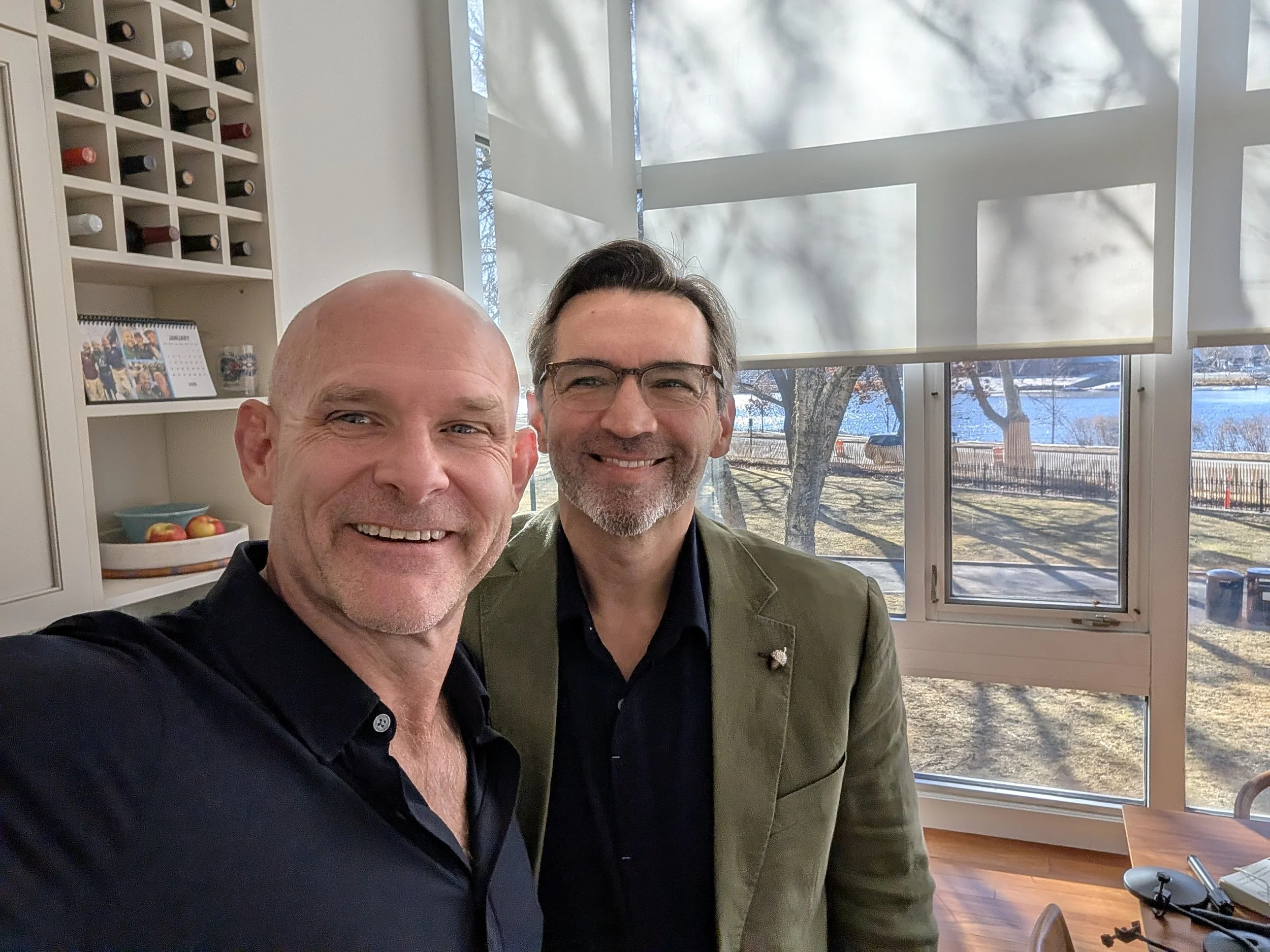
Some relationships transcend the organizations and projects that first brought us together.
Andy Palmer and I first met in 2005, when we worked together at Infinity Pharmaceuticals. More than 20 years later, we've collaborated on many fronts, navigated different chapters of our careers, and, most importantly, remained close friends.
Andy has been a mentor, a sounding board, and a trusted friend throughout that journey. His perspective and generosity have meant a great deal to me over the years.
It was especially meaningful to sit down with him for unNatural Selection – not just to explore his remarkable perspective on entrepreneurship and innovation, but to share a conversation with someone who has been part of my own journey for so long.
