

Capital Allocation vs. Bureaucratic Drift in Legacy Systems
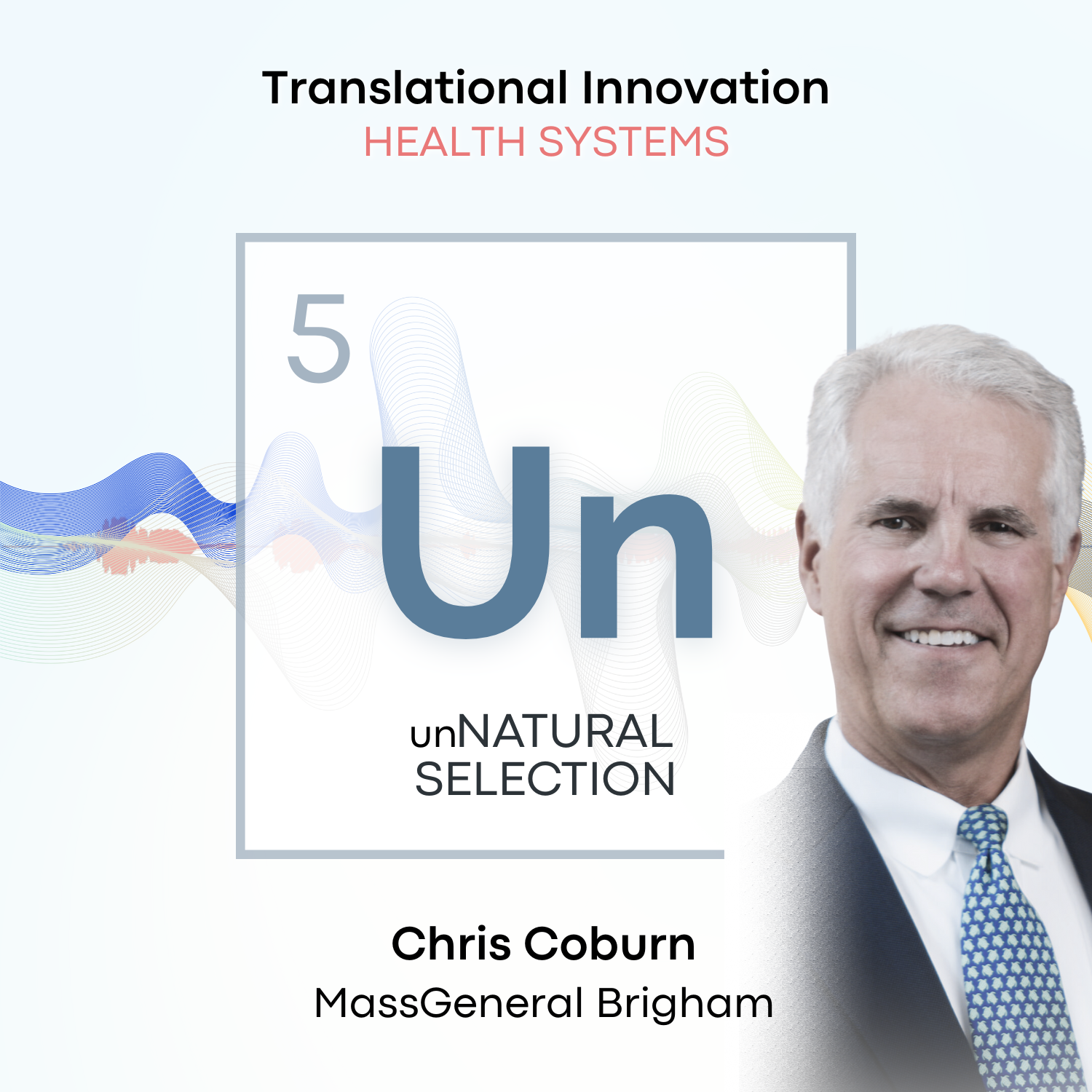
From Concept to Clinic. Join us as we explore healthcare innovation with Chris Coburn, Chief Innovation Officer at MassGeneral Brigham, one of the largest and most influential healthcare systems in the US. Based in Boston—a global hub for biomedical innovation—MGB is not just an adopter of new technologies but a co-investor and co-designer, actively shaping solutions that address real healthcare challenges. Discover how MGB ensures innovations are built within the context of healthcare delivery, rigorously tested within their unified system, and scaled effectively. Tune in for insights on fostering resilient, impactful innovation in healthcare.
-
(Auto-generated by Spotify. Errors may exist.)
Chris Coburn is Chief Innovation Officer, Mass General Brigham, an integrated healthcare system that includes Harvard University affiliates Brigham and Women Hospital, Massachusetts General Hospital, Massachusetts Eye and Ear, and McLean Hospital.
1:27
Chris’s background
Mass General Brigham is the nation's largest academic research enterprise with over 20 billion in an annual revenue, 1.5 million patient visits, and more than 2.9 billion in research expenditures.
It also has a managed care organization, outpatient facilities and community hospitals. 7000 of its faculty are appointed at Harvard Medical School.
1:48
A member of the senior leadership team, Coburn is responsible for the commercial application of the unique capabilities of MG BS 82,000 employees.
His 140 person business development groups activities include strategic industry collaborations, company creation, investing, translational development, commercial strategy setting, licensing and innovation management.
2:09
His group also manages a nearly 500 million venture fund.
Prior to joining Mass General Brigham, Mr. Coburn was founding director of Cleveland Clinic Innovations.
During his tenure, Cleveland Clinic spun off 57 companies that raised more than $700 million in equity financing.
2:26
Previously, he was Vice president of Patel and served on the staff of Ohio Governor Richard Celeste.
Mr. Coburn serves on multiple boards.
He and his wife, Nancy, have three grown children.
Chris, it's a pleasure to have you on our next selection.
Thank you for being here.
2:40
Speaker 1
Hey, Nick, thanks for having me.
It's really great.
Just two quick, quick corrections. 2.9 billion is the level of research activity for us and then also we're up to about 2.6 million patient visits.
2:55
But again, thank you for having me and look forward to talking.
3:00
Speaker 2
Perfect.
Thank you.
So I start with the same question with everybody, just because we can't assume what the listeners know.
And also for as much as I am a part of the MGB system, I also may not necessarily know in detail what MGB sees as its core business.
3:18
What is the business of Mass General Brigham and its employees?
So if you could, Chris, could you tell us what is the business that MGB is in and what your job is within that?
3:25
Speaker 1
I, I, I appreciate that question, especially in this time tumultuous time and healthcare overall.
I, I would say we would, I would describe our business in four categories.
Obviously it's to to treat the sick or try to make people healthier.
3:45
Two, to do research as as you referenced, 3 to teach and four, to benefit the community.
If you go back to the founding of the original piece of our system, Mass General Hospital in 1811, I think those aspects have basically always been there.
4:08
So it's, it's, it has been a continuity in terms of the priorities of why we exist as an organization.
4:16
Speaker 2
It's interesting we start there, right, Because obviously the the basis of this podcast and blog is that I look at corporate innovation through the lens of natural selection and think about how we can find parallels across those things, which I've experienced in multiple fronts, whether it be biotech, technology or healthcare.
4:31
How to balance reacting to environmental changes while innovating for MGBS’ future competitiveness
If you look at MGB, so in Mass General Brigham MGB short for, for those of us that are familiar with it, it's the largest hospital based research enterprise in the US and it's constantly evolving.
You know, and generally speaking, the larger the Organism, the harder it is to adapt to environmental changes as opposed to startups, they're like constantly pivoting and adapting.
4:55
And yet when we look at MGB, it's undergone huge changes over the years.
You know, you mentioned its founding and in the 1800's the, the hospitals, MGH, Mass General Hospital and Brigham and Women Hospital.
In 1994 they joined forces under Partners Corporation. 2015, there was a major disruption with the EHR implementation and overhaul, electronic health records for people not familiar with that.
5:19
And in 2019, just before COVID, Partners rebranded as MGB, Mass General Brigham.
So when you think about these evolutionary changes, many of these actually all of those really being intentional.
And then you think about kind of like the disruptions that you perpetually experience, whether it be tech companies, retail entrance, COVID, and most recently, the federal government's 15% cap on indirect costs for some of the grants, especially from the NIH.
5:47
How do you balance reacting to all of these disruptions while simultaneously innovating for MG BS future competitiveness?
5:56
Speaker 1
You know, first of all, as you said, in terms of the focus of unnatural selection, your podcast, I think, I think it's interesting when you look across industries relative to innovation, to me, a common denominator, if not that common denominator is organizational innovation.
6:13
The importance of organizational innovation
It's it's what enables the technologic or, you know, even the scientific to emerge from that.
So when you, when you look at us, you know, that long sweep that you just went through and mass pioneer is celebrating nearby Centennial.
6:30
So, you know, literally centuries of, of looking after the 2nd and doing some incredibly important breakthrough science again, it's, it's how things are approached, how things are enabled.
6:47
And so this top level of the organization, you, you know what's going on there.
Well, we're essentially delivering a product.
We are treating people, we're providing a service.
And in doing that, we absorb a lot of technology, technology that starts elsewhere.
7:09
And then, you know, part of what occurs is that technology gets adapted to fit our needs.
So, you know, to me, that's a very interesting question.
So one of the things we did in my shot, you're working with system leadership was to create a small investment fund that is focused on digital and AI innovation that starts out principally outside of the four walls of our system.
7:40
And it allows us to partner in a very meaningful way with the companies, maybe more than would otherwise have been available if we were just a customer.
So, you know, a set of companies have been invested in a, a bridge we can talk about is I think a great example of, you know, the early impact of generative AI and healthcare.
8:08
You know, bridges initial focus, ambient documentation.
They have a fantastic product.
We have 800 users in the system, clinical users in the system.
Now it produces a note and as you said, the epic compatible note in the hands of the clinician within one minute of the conclusion of the patient encounter.
8:31
And you know, and other companies have also also have that and we work with those other companies, but I'm talking about a bridge because we're also an investor in them.
And that created a special kind of relationship.
8:47
A different company, Dexcare was spun out of Providence Healthcare in Seattle.
It's a scheduling and load leveling or initially technology and you know, so important in terms of access to care, you know, as a topic for your priority for Ariadne, and that is partly technology and innovation enabled.
9:11
And then finally going a different direction is a company called Amplifier that has some really neat technology that drives the the learning drives learning to a higher level.
9:29
And they, they focus on a really interesting, their initial point of entry is on strongly held misinformation and, you know, kind of interesting and particularly in healthcare, how people acquire an intensity around a set of feelings that are just wrong.
9:49
And I personally associate this often with sports and sports discussion when you're talking to people, but it's it, it could be life or death in healthcare.
So understanding how that happens and how to break it down and how to restructure what resides in, you know, someone's mind, it is really quite important.
10:10
And Amplifier was created to address that.
So just some examples of how we, you know, try to look beyond the capabilities that exist within the system, but understanding that as us as a user and then, you know, frequently an enhancer of technology that's developed in the outside.
10:33
So, long answer, but that is one example of innovation in our broad and diverse organization.
You.
10:43
Speaker 2
Know that's great and you know you, you obviously kicked off a great conversation around organizational innovation, right, organizational evolution.
10:52
How to balance a cohesive system-wide approach to innovation while retaining the individualistic approach at each hospital
From that perspective, MGB is like the parent corporation over these massive hospitals, you know, and both of them well all the, the whole health system is incredible.
MGH and Brigham and women are consistently the best, some of the best hospitals in the US and in the world.
11:08
So when you talk about innovation and incorporating these innovative products into your workforce, how do you balance kind of like a cohesive system wide approach to innovation while also retaining the individualistic approach at each hospital might have?
11:29
Speaker 1
Yeah, I great question.
I, I think that it cuts right to the core of academic medicine, which is, you know, it's, it's one of the most rigorous, if not the most rigorous category in the US really the global workforce in terms of being a healthcare provider.
11:49
And at least in my mind, essentially every one of those people, you know, whether they're clinicians or nurses or, or full time in the lab are sources of actionable innovation.
So it's kind of on us, you know, in the central organization to help to equip them and, you know, create the approaches, the policies that allow their insights to flourish.
12:17
So it's, you know, an interesting thing to jump to a specific area.
So if you talk about working with industry, so you know, not just innovation in general, but things that are going to result in a product ideally outside of the organization.
12:33
So you'd said earlier that our 7000 Harvard appointed faculty, only 5% or 6% depending on how you cut it of our faculty are involved in innovation that then results in something that expresses itself in the commercial realm.
12:51
And, you know, if, if we as an organization exist, the better the lives of people, you know, the more, the broader that aperture, you know, the more we address why we were created in the 1st place.
13:08
So, so in my mind, you know, we want more innovators, we want to equip them better.
And, and so we have a whole set of programs, which I'm happy to talk about in terms of ways we try to grow, you know, the, the, the scale of our innovation workforce and then to equip them.
13:28
But you know, the, the key point to us is the delivery of care.
Again, going back to what we were saying a moment ago, the delivery of care itself creates an opportunity for innovation.
And, and the thing about a hospital that's different than a company or different than a university is, you know, the, the sacred moment of that patient interface is occurring, you know, within our organization.
13:51
So the opportunity to learn from that and, and ideally enhance it presents itself every day.
And so unlike even the best and most successful companies, you know where they have to go to a third party typically to gain clinical insights, You know, that's part of our deja and.
14:11
Speaker 2
And you bring up the workforce and obviously I can't help but bring up implementation, implementation science, given that, you know, I've been at Ariani for such a long time in Harvard School public health.
14:22
Implementation science
So innovation, it's interesting, right?
Because it's so much is happening these days.
I mean, we're literally, I talk about all the time how we're in this hyper innovation, you know, time especially made available through the Internet and cloud computing and now AI, which it feels like even those of us in the industry just feels like every month is different.
14:40
There's something new.
And as consumers, it's hard enough to keep track.
As an organization, it's almost impossible to know where do you invest?
What do you apply, what do you implement?
What do you look out for?
What do you ignore?
And then to add a layer on top of that, health systems, which I'm very familiar with, they can only sustain so much adoption of innovation, right?
15:02
It's just like you just camp on bar the most up because doctors are getting hit by vendors.
You know, you're coming up with your own innovation internally.
It's just constant stuff going on.
So you kind of had to like bet on specific horses every year.
And some of those projects might actually take multiple years to implement and unroll and roll out and train people.
15:21
So with all of these things in mind, and I know your job is very hard because you're at the crux of all that, how do you think about all these different innovations coming at you at this speed?
And then what you're trying to do internally, all of that in context with how quickly the health system can absorb those innovations.
15:41
Speaker 1
Yeah, I, I think of it as managing dynamic tension.
So essentially you're talking about two different curves and trying to get that optimize the point where they crossover and, you know, or maximize the space underneath those curves.
15:57
And you know, and I don't want to overstate my role or anyone in central administration, you know, the buyers, if you will, of external innovation are throughout the organization as, as you know from Ariadne.
16:13
So you know, those people themselves are, if you will, arbiters of innovation.
I, I think in central we're talking about again, creating the environment, trying to ensure that there's necessary resources at the individual level, as I was saying before, enabling and, and hopefully guiding leaders and folks within the organization who might be innovators.
16:41
Maybe I would say different than I used to be pretty active even going back to when I was at Patel in the Industrial Research Institute, which was fascinating because you had all these different industries there.
And then more recently, since I've been at MGB, a couple groups that are national that also involve multiple industrial segments.
17:04
And, and again, this question of what, what are the transcendent issues, at least from my travels, you know, brings you back to these, you know, how are you best organizing and directing and equipping your team to, to be able to do it.
17:24
So I, you know, we're not so much in as you might be in an industry setting strategic innovation targets.
We're more organizing equipment.
So to try to make that clear, our office spent several years getting the Gene and Cell Therapy Institute organized and launched at MGB.
17:49
And you know, a terrific team has come in to run that.
A cardiologist named Rodger Jar runs it.
Rodger spent many years in academic medicine doing gene therapy and then more recently was at Flagship pioneering and you know, a person really ideally situated to provide that hands on leadership.
18:11
So stepping back, you know, the role of central in this was to recognize the theme, the opportunity, do the research.
For instance, over 400 faculty in the system are doing work in gene therapy, cell therapy, gene delivery and associated things like software.
18:36
And that's actually growing.
I think if I remember right about 500 million in total research support going to those people.
So an area of opportunity and and if you will, a patient need you know so many unmet needs that might be addressed by those technologies.
18:58
So for us, just going back to kind of the broad organization, setting that theme and building the entity and then bringing in the right people to run it was our job.
And, and more recently we've been working on behavioral health opportunities in a similar way, including things like psychedelics.
19:21
But, but I, I hope that makes sense.
You know, we're, we're not a company, We're not by ourselves or we're not bringing in, you know, consultants to, to say these are the 5 or 10 most important areas where working with the faculty, shaping themes that then we can construct capabilities around.
19:46
Speaker 2
Yeah, that makes total sense.
And and it definitely resident.
I mean, it's not like ultimately you do build products with your collaborations and so on, but your business is not to create products.
I mean, your business is to deliver proper health.
And So what you're doing is strategically looking at where the, the the patterns are and the discoveries are in science and healthcare and saying, OK, what you know, where is this field going to be in, in 5 or 10 years?
20:13
Because, you know, to construct something like what you just said, it takes a while.
I mean from the, you know, from identification to planning to resourcing all the way to building.
And then staffing it and launching it, you know, it's a 510 year effort I would imagine.
20:28
Speaker 1
Well, yeah, several good points.
Now, Mike, you know one again, thinking about, you know, what businesses are you in or not in?
First of all, no university and no hospital was ever established for commercial outcomes, which is a point you just made.
20:45
But you know, the way I think about it, we are, we do exist at both ends of the spectrum where discovery science is occurring in abundance and patients are being treated so that, you know, the, the classic bench to bedside and back characterizes us, but but we don't fill that whole gap.
21:02
You know, partners, you know, collaborators have to exist to, to take those, those benefits forward.
And so, you know, it's, it's just interesting to, to think about it in that way.
21:18
So it's, it's, you know, this question of again, identifying areas that that can become priorities, even though, you know, if you were to, to create a, a map of where the strengths are for our faculty, it I guess I would say a thing that characterizes us is that breadth.
21:44
And you know, as you mentioned, I worked at Cleveland Clinic for a long time.
The level of research that we have is more than 7 times and maybe up to 8 times what Cleveland Clinic is.
And that's not to say that what happens at Cleveland Clinic is not world class.
22:01
It is, but it, it's heavily in cardiovascular as, as one area of real capability versus US where it's so broad.
So now if you think about that in terms of future planning, you know, in the the last 10 years or more, cancer was the hottest area of innovation and investment in healthcare.
22:24
And more recently neuro has has come back.
It was kind of in a long winter and cardiovascular drug development partly driven by GLP one has also reversed.
It's kind of interesting to see those broad curves and then say, OK, you know what, what do we, what are the assets we bring, the people, the technologies that will help us to be in front on those?
22:51
Speaker 2
Well, one of the things you said was interesting you're getting back into neuro.
22:53
Neuroscience
You know that like you said, the long winter in biotech, it was for a long time divesting from neuro.
And so do you see that a resurgence around the neuro, the neurological space?
23:03
Speaker 1
I don't want to overstate that, but at least where I'm sitting and and what we're seeing, yeah, it is, it is picking up.
I think, you know, insights on neuroinflammation have fueled further steps progress, obviously including on Alzheimer's, I think has brought back more folks from the sidelines.
23:32
But it was a long go and it's exciting.
I mean, we, you know, one of the reasons I enjoy working here is working at Mass General program is just so many top tier scientists, clinicians and just just, you know, people in general that are committed to diseases like Alzheimer's or Ms. or ALS and, and are doing some of the best work in the entire world.
24:05
So, you know, pretty neat that it's all all in are largely in the same organization.
24:13
Speaker 2
Yeah, I mean, and, and just to be clear, my enthusiasm was exactly that.
I mean, it's just it's such a necessary space, the neurological space when you talk about things like like Alzheimer's and other, other diseases and, and yet it's such a complicated and difficult scientific space.
24:31
So that's why for those that aren't familiar, well, that's one of the reasons why pharma was divesting.
It wasn't because there isn't an opportunity or a massive market.
It's more because it's just a very, very difficult space to to do something significant.
So I was encouraged and and excited when you said that MGB is getting further back into that.
24:51
Speaker 1
And I, if I were just to reflect on my time at Cleveland Clinic versus Masternal Brigham, if you think about it, as you know, let's say medical device innovation versus, you know, biotherapeutics, you know, a beautiful thing about, let's say a cardiovascular medical device tab you, you know, gets conceived, gets piloted, it gets optimized for manufacturing and ultimately, hopefully gets approved and reimbursed.
25:20
You, you can, in a, in a sense, you can see all that, you can measure the impact.
It, it's, it, the parameters are very well established.
Now, if you're talking about a, a, a drug to, you know, that goes into the nervous system, goes into the brain and, and you know, you have to demonstrate in a very specific way that first of all, the safety, of course, and then the benefit and, and the, the financial, financial aspects of, of that.
25:52
You know, that's, that's so complicated.
And so anyways, it, it's no, no surprise that that exit occurred and hopefully it's going to be a vigorous period assuming all these other global factors don't, you know, don't disrupt things.
26:14
But I personally am quite hopeful that we're going to have a very exciting, you know, especially as things like, you know, CAR T technology works its way into autoimmune diseases and neurological disorders from its initial beachhead and cancer.
26:34
Speaker 2
Yeah, You know, and, and just like in, in, in nature, sometimes some punctuated change kind of unlocks an entire field of evolution.
And in this case, you, you mentioned some of the scientific and technological progress has made it so that companies are starting to look back into the neurological space.
26:51
Things that were impossible 10 years ago or even five years ago all of a sudden like, oh, wait, hold on a second, this is actually potentially doable.
And so it's exciting to see how the field is getting back into that.
You also mentioned though the bench to bedside the that spectrum which is notoriously difficult in healthcare, that whole translational development, which is I know it's part of your background, something you focus on.
27:15
Can you tell us a little bit about bridging that gap?
You know, and for those listening, there is a lot of activity upstream in the discovery side, whether it be biotech or devices or diagnostics, what have you.
27:27
How to get from discovery to point of care
And then all the way downstream, you have the point of care where you have patients, you have clinicians, you have health systems actually implementing these things that scale.
And in between, there's this chasm.
It's almost in many ways, you know, kind of like a Death Valley where innovations struggle.
27:44
Getting from the discovery space to actually point of implementation in that field is called translational sciences, translational development, translational medicine, depending on who you're talking to.
And the idea is how do you translate raw discoveries into something that can be delivered at point of care.
28:05
And obviously that involves regulations and all kinds of things, but a lot of it is also health system preparedness and readiness and training clinicians and educating patients and all those things that involve an implementation.
So could you talk a little bit because we spoke spent a lot of time on the innovation side.
28:21
How do you how do you think about getting that to the finish line, which is actual usage?
28:26
Speaker 1
Yeah, great question.
And obviously an enormous priority.
I think it's kind of interesting if you think about Boston from let's say Cleveland or any other part of the country, you know, you always, you have to acknowledge the global leadership that's there.
28:46
But despite this translational gap, is, is present in this town just as it is all through the US.
So, so I think an important thing, just as you said, is identifying and acknowledging that that gap exists and then taking the steps to try to address it.
29:06
And for us that that means a few different things.
One we established in 19 and have grown it since then, a translational investment slash development mechanism, a set of programs that allow us to assist.
29:30
So once a highly promising technology has been identified, you know, it's always preclinical to to drive it forward, to do the added work and even to get it into the clinic.
And you know, this is a set of capabilities we recruited in a handful of people from industry specifically just to work on this.
29:54
And then we've actually have some financial resources to work with as well.
So by and large, we're mimicking what might occur in industry while it's still within the organization, which is is important for a lot of reasons.
30:10
I'm, you know, obviously proximity to the caregiver givers to the original innovator, but but also from a even a regulatory standpoint, when the technology still, you know, in the academic center in the, you know, in the clinical setting, it can advance much more quickly and usually at a much lower cost than if it's, you know, out into the commercial realm.
30:37
So this gives us what I think is really a unique opportunity to enhance, to validate to, you know, at times modify the technology, but most importantly to accelerate it to, to get it to patients.
30:52
So we have a set of technologies that that have worked through it.
We have one large program and a few smaller ones, but you know, all are on the same theme of providing the expertise, the industry knowledge and resources necessary to make that happen.
31:11
And some other academic centers have similar approach and you know, I'm a big fan and the ability to learn from peers and, and when we launched this program, we have done, you know, very in depth benchmarking of best practices.
And you know, now I'd like to think that our programs are flagship in this we call Amplify.
31:34
You know, I'd like to think that that's a national best practice.
31:37
Speaker 2
As you've spoken through this conversation, MGB and the hospitals within it are, are pioneers in so many different areas of healthcare and medicine and, and, and so many other research and so on.
31:50
The Boston Healthcare Ecosystem
And in a big way, MGB and its affiliated hospitals have been a cornerstone behind this exceptionally dense healthcare ecosystem That's here in Boston, right?
I mean, we, we, we talk about the elements of Silicon Valley or the Boston's and so on, but it's hard to overstate how, you know, this combination of world renowned healthcare systems, world renowned universities, venture capital, startups, technology and so on, this meant this, this mental capital of diverse skill sets all within.
32:28
I mean, I don't know how big Boston is, but it's not big, you know, we're not New York.
How does all of that factor into.
Yeah, that's so true.
32:36
Speaker 1
And I, I got to say, just to jump in, you know, being in Boston dozens and dozens of times before moving here in 2013.
And also growing up from the time I was an infant going to Cape Cod, you know, I felt like I knew the town pretty well.
32:56
My wife's father's family is from Boston.
But there's nothing like being on the ground here, you know, being on the team and then walking, you know, world class institution one after another.
And I, I think it doesn't exist like that anywhere else in the globe.
33:14
And it might not exist like that at any other time, you know, over half a Millennium, a Millennium.
It is just stunning.
And, you know, a simplistic way to think about that.
But I think it, it's yet still instructive.
33:31
You know, some folks, particularly in the venture community, like to talk about Boston as kind of Hollywood.
And if you stay with this analogy, you know, Hollywood is a small little town.
You know, it's appended to a much larger community.
33:47
Yeah.
Over the decades, every single skill needed to, you know, produce films of significance has, you know, come to rest in, in that small little geography and has flourished now for decades.
34:09
You know, now the movie industry's in another period of change.
But I, I, I think that holds up for us.
You know, that a, a beautiful thing about Boston that's certainly not true in other cities where I've lived is, you know, everyone, you need every tool to make a successful company, whether it's biotech, diagnostics devices and, and even digital in most categories of digital is present.
34:41
And oh, by the way, you probably don't even need to get in your car to, to.
And you know, I can't say that in certainly the Bay Area or, or Chicago or even New York.
I mean, the New York biotech scene is a little more spread out.
34:58
So it is something truly special and I, I hope for the sake of, you know, every patient on the planet that it, it stays that way long into the future.
35:08
Speaker 2
Yeah, no, it's exceptional.
I mean, I've been in Boston now for 25 years and it's been amazing seeing the development.
I mean, the the seeds were already there, but they've just kind of blossomed in a way that I couldn't possibly have imagined.
35:24
In the interest of time, I had two more questions, but I'll actually merge them into one.
35:30
What’s most exciting about the future of healthcare?
You know, with everything we've talked about, I'd love to know what you're most excited about the future of healthcare.
You know, where do you see the opportunities for an MGB?
And then the second part of that question is for innovators out there that are excited about healthcare doing something or want to do something, how what do you recommend for them to be thinking about that future of healthcare and in particular how they might interface with MGB and that innovation factory effectively that you have for fostering and developing the future of human health?
36:03
Speaker 1
Well, on the second question, first, I would say, you know, my office is all about collaboration and partnership.
You can talk about, you know, what is the base function for us.
It's that and, and by the way, for the sake of your audience, we the World Medical Innovation Forum, we created it 11 years ago to to gather industry around this idea of collaborative innovation.
36:24
This year it's the September 15th to the 17th.
We'd love to have folks there take a look at our website.
So, so I think, you know, we want to be as good as we can be in terms of being a partner in terms of the future.
36:40
What's most exciting?
First of all, just to put it in a daily context, This is a complicated and challenging time and healthcare, particularly on the delivery and, and, and you know, hopefully that, you know, those extra challenges maybe will spur some new innovation.
37:01
But laying that to the side, you know, we've reached a period in terms of the ability to generate patient data to to aggregate it and then to interrogate it in a way that has never, ever been possible.
37:17
Combine that with a whole range of technologies relative to genotyping, foundational breakthroughs that have been enabled, and now add in generative AI.
It's stunning and maybe a little sobering just to think what's possibly just a few years away.
37:38
And you know, I mentioned the bridge, that's an example, but so many other things will occur.
And again, in terms of progress, particularly on the digital side, but but also on the therapeutic, you know, once you reach a threshold, unless something really bad happens, you're never going back.
37:58
So, you know, every improvement in these technologies is going to lead to more and more.
And so, you know, I, I on my shared panels and, you know, this is a common question.
You know what it, what did we think in 2015 this period would look like?
38:17
And you know, we would have gotten a few things right, but for sure, I don't think we would have been we could have prognosticated on the availability, you know, the growing ubiquity, of course, AI, but things like generative AI as as a powerful, powerful tool.
38:37
So I'm excited about the future.
I'm concerned about the present.
It is a challenging time and and you know, fingers crossed, but I think patients will be better off and hopefully far better off and then not too distant future.
38:55
Speaker 2
I do tell people that AI for its promise and its hype, I do believe that healthcare, I'm specifically in the genomic space, those are leading edges that are seeing value today and will continue pushing those boundaries because there is actual utility and usage of AI and so much of healthcare.
39:14
So this is an area to watch out for for actual application of AI and the future of it.
39:19
Speaker 1
A great thing about what we do is we get to be around clinicians a lot and, you know, even at the point of delivery of care.
So you look at a horrible disease like glioblastoma, things are happening right now.
And I can remember a while ago being exposed to being at a presentation tied to tied to the disease.
39:44
And the clinicians were saying they were viewing the progress on GBM.
This was this thing I'm thinking about was more than 10 years ago.
And they were saying that the course of care had not changed in 50 years.
You know, essentially there'd been no progress.
40:00
And pretty exciting to think about where we are today.
And some of that work's been done right, you know, in our system at both MGH and Brigham.
And so, so those are being enabled.
And now increasingly those therapeutic classes are being further accelerated by generative AI.
40:22
Well.
40:23
Speaker 2
With that, Chris, it's been a privilege spending this time with you and getting to talk to you again.
You know, we haven't spoken in a couple of years.
Thank you so much for being here and and I look forward to talking to you again.
40:35
Speaker 1
Thank you, Nick.
Always nice to be with the Dayton Flyer.
See you later.
